Log in


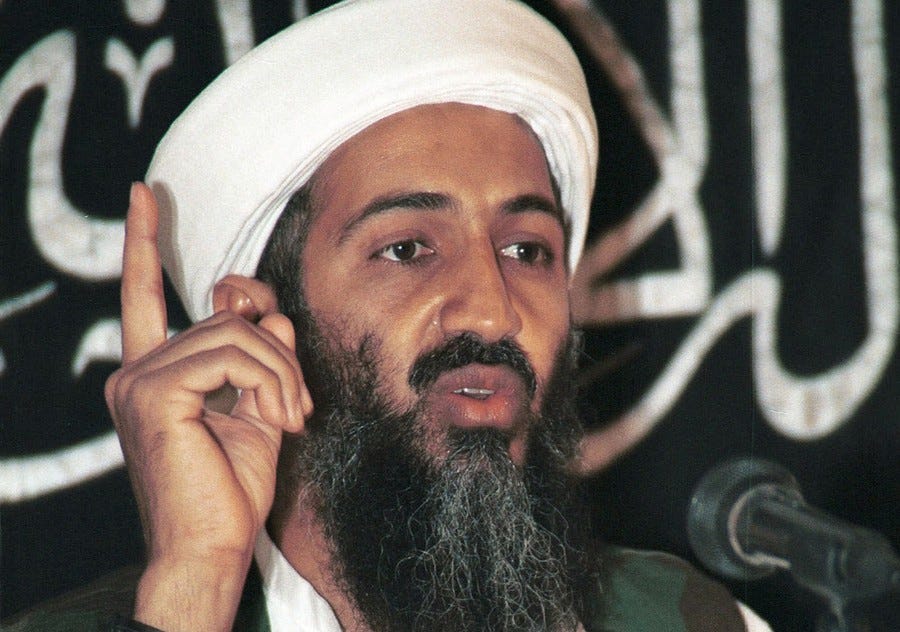
It took him 25 years, but Osama bin Laden is winning his war on the Great Satan. He wanted to bring to an end the U.S. military presence in the Persian Gulf and the Arabian Peninsula, and it is happening.
Retired four-star General Barry McCaffrey assessed recently that the U.S. military has “probably permanently lost access to 15 Persian Gulf bases,” due to Trump’s war on Iran. The Pentagon Inspector General, in a report released today, said that “hundreds” of buildings on U.S. bases across the Middle East were destroyed by Iranian attacks that also caused $184 million in damages to diplomatic facilities in the region. All that damage was caused by thousands of missiles and drones fired by Iran.
Two F-15 fighters were destroyed during the war, along with one A-10 fighter. Five KC-135 refueling aircraft were destroyed on the ground, along with numerous helicopters. At least 30 Predator drones were destroyed “in various circumstances,” including being hit by drones and missiles while they were on the ground. The Pentagon has not released the number of Navy and Army weapons systems that were destroyed where they were deployed on U.S. bases, but it has been reported that several radar systems that cost in the billions of dollars were destroyed by Iranian missiles in Saudi Arabia.
It is significant that the Inspector General’s report did not put a dollar value on the damage done to military facilities in the Gulf region. Those would include buildings, hangars, storage facilities, barracks, offices and the like. It has been previously reported that U.S. military personnel had been moved from their bases in all the countries along the Persian Gulf, including two bases in Bahrain, five bases in Kuwait, three bases in the United Arab Emirates, three bases in Oman, one base in Qatar, and two bases in Saudi Arabia. Some were moved to U.S. bases further away from Iranian missiles and drones in Jordan. That’s not working very well. There have been recent Iranian missile strikes on U.S. bases there. Other military personnel were moved to Cyprus and to bases in Europe.
The U.S. practically decimated its defensive missile capability in the Gulf trying to shoot down Iranian missiles and drones. The Inspector General report says only that “munitions expenditures resulted in strategic inventory shortfalls and revealed industrial base bottlenecks for munitions resupply.” The Inspector General says they’re working on the problem.
That more or less covers it. The U.S. military presence in the Persian Gulf, outside of the Navy at sea outside the waters of the Gulf, is gone. The Pentagon still claims that approximately 50,000 troops were serving in support of “Operation Epic Fury.” They claim between 40,000 and 50,000 of them are still there, but they haven’t said where they are.
Bin Laden was particularly concerned with the U.S. presence in the Persian Gulf and swore in an infamous Fatwa released in 1998 that it was the duty of every Muslim to liberate the “lands of Islam” from the “grip” of the Great Satan.
So that’s the headline. Osama got what he wanted. It’s how the goal was accomplished that’s interesting.
Iran fired every single one of its drones and missiles defensively. They were trying to damage the U.S. capability of striking Iran after Trump’s initial attack in February. In other words, if Trump and Netanyahu hadn’t gone to war against Iran, we would still have all our Naval and Air Force and Army facilities in the Gulf.
Why were all those bases knocked out, all those buildings and other facilities and weapons systems destroyed? Because the U.S. military thought it was invulnerable. The Pentagon maintained its bases in the Gulf region pretty much the same way they did in Iraq and Afghanistan. They built berms around Air Force bases and Army installations and had guards on the base entrances against terrorism attacks. They built bunkers near military buildings and barracks, so if there was an attack from the air, people could rush into them for safety. The Navy simply built warehouses and office buildings in Bahrain in the area around the port where U.S. ships in the Gulf were resupplied. Previously, I’ve published photos of the damage done to the 5th Fleet Headquarters and resupply facilities. They were undefended.
Bunkers didn’t save the six who died in a drone attack on the base in Kuwait, or the soldiers who were killed in Jordan. Eighteen American military people were killed during and after Trump’s “Operation Epic Fury.”
The simple way of putting it is this: The Pentagon was not well prepared for Iran shooting back. That is why 15 U.S. bases are no longer functional in the Persian Gulf.
The Inspector General report has whole sections that describe what has happened since U.S. “assets” got blown up by Iran. A section called “U.S. Basing and Disposition” says basically that what they’re doing now is “taking into account Iranian ballistic missiles, one-way unmanned aircraft systems (OWUAS), and maritime threats.” There is no explanation why there was no preparation for those threats beforehand. Another section called “Logistics and Sustainment” tells the tale of how the U.S. Transport Command (USTRANSCOM) was responsible for moving stuff around after the war began and U.S. bases started to take hits. They actually brag about how they accomplished what they call – you’ll love this – “aircraft flushing—the rapid removal of air assets from an area under attack or threat.” If that sounds pathetic — celebrating running and hiding — that’s because it is.
Last year, Hegseth and Trump ordered every general and admiral in the U.S. military to fly to Quantico so Trump could subject them to a campaign rally speech and Hegseth could lecture them about “fat soldiers” and haircuts and beards. Those were the priorities of Donald Trump and Hegseth before they launched their war. That is why we don’t have a military presence in the Persian Gulf after “Operation Epic Fury.” It seems the U.S. military could not withstand the fury of the Iranian military, which does not have a trillion-dollar defense budget and manufactures its missiles and drones in underground facilities that all the missiles and bombs we dropped on Iran were not able to seriously damage.
It took a few terrorists armed with some boxcutters to take down the World Trade Center and do significant damage to the Pentagon. Since that happened, we have spent trillions of dollars on two wars, lost more than 7,000 soldiers and sailors and airmen, and lost the wars themselves. We then spent billions and billions of dollars on our military facilities in the Gulf region to maintain what the military likes to call a “presence” in the region.
What that accomplished over the last 25 years is, to put it mildly, unclear. When it came time to wage a war in the region where we maintained our “presence,” Iran won. They closed the Strait of Hormuz, costing American citizens billions of extra dollars in the cost of gasoline and groceries and who knows what else. Now Iran has used its proxy, the Houthi rebels, to damage a major oil pipeline in Saudi Arabia and close the strait at the mouth of the Red Sea, doing more damage to the shipment of oil and other necessities to Europe and points west through the Suez Canal.
As I recall, the U.S. Navy wrapped Osama’s body in canvas and tossed it over the side of an aircraft carrier in the North Arabian Sea after he was killed in Pakistan in 2011. At least part of the flotilla of Navy combat ships we’ve got cruising around in circles allegedly maintaining Trump’s blockade of Iranian ports is in the North Arabia Sea in the waters above Osama’s dead body.
You can almost hear his ghost laughing at the Great Satan.