Log in


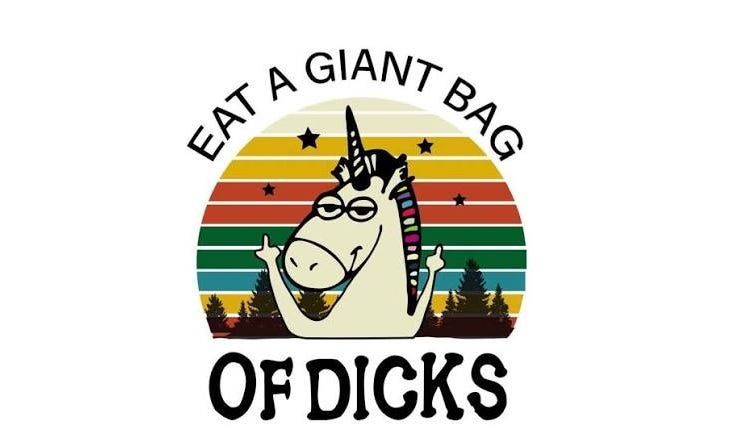
Oh, here we fucking go. The demands for civility and forgiveness are starting to roll in. Eat an entire bag of dicks and miss me with that shit, son. Trump voters made their pigsty. They can lay down and die in it without an ounce of pity from me. They certainly will never receive forgiveness. I’m fresh out, and I can’t be fucked to go to the store to get any more. Sorry, MAGA, you get nothing but the back of my hand until the day you die. Then you’ll get a round of applause. The world will be a better place without you in it.
These are dark times, but I will continue to tell the stories you need to hear in a clear (and usually profane) voice. If I entertain/anger/inform you, preferably all three, please consider becoming a supporting subscriber today for only $5 a month or just $50 a year (a 17% discount!).
If subscriptions aren’t your thing, you can leave a one-time PayPal or Venmo tip instead!
OK, this is where we are: Just six weeks out from the midterms, and Republican voters have pretty much abandoned their party of pedophiles, Nazis, and thieves. Not because they’re pedophiles, Nazis, and thieves, of course. THAT, they don’t give a fuck about. The problem, you see, is that the collection of corrupt white nationalist sexual deviants is also manifestly incapable of governing, resulting in economic conditions that could charitably be described as “dog shit.”
It really is impressive how the regime took one of the strongest economies in the world in the last 50+ years and destroyed it in less than twenty months. Not only destroyed it, but did so in such a way that it is impossible to blame anyone else other than the regime. Joe Biden did not start a trade war with, well, everyone. Joe Biden did not slap tariffs on, well, everyone. Immigrants didn’t start a war with Iran and send the price of gas and diesel through the roof. Trans kids didn’t double your grocery bill.
Trump did all of that and then went on TV and bragged about it because he’s a fucking moron suffering from severe dementia. Thus, the entire country is furious at Republicans for the state of the dog-shit economy, and they’re either going to vote for Democrats or not vote at all.
That means Republicans are going to take a huge electoral hit. One they’re going to struggle to recover from, even two years from now (when Trump’s economy will be even worse). The illusion that Trump and MAGA are an unstoppable political and cultural power is about to be crushed like an empty beer can under a monster truck wheel. This brutal midterm beating will spawn the very real possibility that the GOP will turn on Trump in a desperate bid to save themselves ahead of 2028. He can’t run again, not legally, not physically, and not mentally. If Trump were twenty years younger, they would absolutely try to overthrow the government with their Hitler leading the charge, but he’s dying, and everyone sees it. He won’t last long enough to even be a figurehead for a 2028 coup.
Republicans understand, very clearly, that they are in a lot of trouble. There will be no Tea Party to erase their sins the way they erased the George W. Bush administration. The press will try as hard as possible to delete Trump, but over a decade of cult worship will not dissipate overnight, and Trump himself will not go away. He will remain on the scene, long after he’s been removed from power, screaming at the top of his lungs that he still controls the GOP and he’s still president. Trump will be an albatross around the neck of the Republican Party until the day he chokes to death on a hamburger.
After a full decade of lawlessness and hate and cruelty and sadism and evil and violence, Republicans have pushed the rest of the country into unknown territory. We are not talking about “moving forward” and “reaching across the aisle.” We are talking about investigations and tribunals and Nuremberg Trials. We are talking about accountability on a mass scale, and it is sending the right into an absolute fucking panic.
That’s why we’re starting to see bullshit like this:

”So I get how you all feel when a Trump voter at this point finally wakes up and turns on him. And I get that it makes perfect sense to say to them, “Fuck you, you helped cause all this damage to real people,” because you’re correct. All I’m saying is keep those feelings to yourself. Trust me, these Trump voters, when they wake up, feel bad enough about what they’ve done.”
Fuuuuuuccccckkkk yyyyoooouuuuu! The middle finger is EXACTLY what they deserve. And so does Joe Walsh.

It’s hilarious, to me at least, that Joe Walsh calls his newsletter “The Social Contract.” Motherfucker, your party shredded the social contract decades ago. Long before Trump waddled down the escalator. Your party of racists and traitors and pedophiles has been hard at work actively undermining democracy longer than I’ve been alive. You do not get to show up after you lost control of your death cult and tell ME how to treat Republicans.
We both know that after Trump is gone, you will immediately, without a moment’s hesitation, try to reclaim your place in your party of rancid white nationalists. You will be right back to calling us “baby killers” and “godless communists” and “child-mutilating perverts.” You will be all in on white grievance and Great Replacement bullshit because yours will be the party of Nazis, and if that’s what you need to be to get back in on the grift, that’s what you’ll do.
This newsletter needs your shares and likes and comments to grow. Tell Substack we’re worth your time and attention!
It’s the same for every Republican voter. Not the wibbly-wobbly independents who switch back and forth depending on the weather. No one who voted for Obama, Trump, Biden, Trump is a committed Trump ideologue. They don’t really pay attention to politics or what Trump is doing. They have a middle-schooler’s understanding of the news and vote based on vibes. But the three-time Trump voter? They know exactly what they’re doing, and they feel no shame at all.
That’s really who Joe Walsh wants us to forgive. The GOP base. MAGAland and the ones who don’t love Trump but vote for him anyway because they hate the rest of us THAT much. Forgive those motherfuckers? Never in a million fucking years.
“Trust me, these Trump voters, when they wake up, feel bad enough about what they’ve done.” The fuck they do! Trump voters don’t “feel bad” about what they’ve done except in the sense that it hurt them personally.
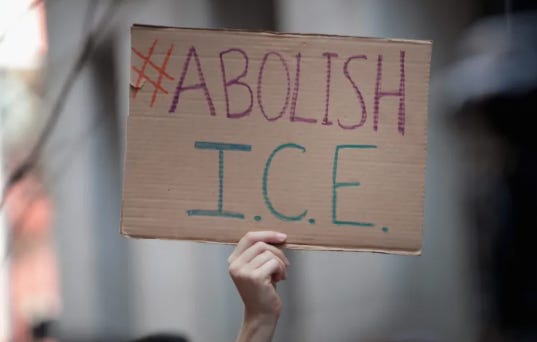
They don’t feel bad that ICE is kidnapping children, torturing tens of thousands of people, and murdering Americans in the street unless it happens to one of them or one of their relatives.
They don’t feel bad that hundreds of thousands of government employees have lost their jobs until they need help and that help is gone.
They didn’t feel bad that Trump is a lawless, bloodthirsty warmonger until it cost $100 to fill up their pickup truck.
They don’t feel bad about any of the pain and suffering inflicted on Trans kids or Muslims or the Black community or Latinos or anyone the regime has targeted for destruction and humiliation and terror. They loved all of that because that’s what they voted for. They wanted the concentration camps and violent assaults in the streets and the abuse of government power. That was the promise Trump made to them, and they gave him their vote eagerly.
He gave them exactly what they demanded. But he also gave the billionaires (both domestic and foreign) what THEY demanded: The wholesale destruction of the government. The crippling of American economic power. The demolition of global order and the spread of chaos.
That’s all great for the rich. It’s all terrible for the rest of us, especially Trump’s rural voters, who feel the full brunt of his economic sabotage quicker than the rest of us. I only have to drive a mile or two a day, if I have to drive at all. My dentist, doctor, and hospital are all within 10 minutes if I’m taking my time.
Your typical Trump voter in the middle of nowhere Sisterfuck, Klannsylvania has to drive 20 miles just to reach the closest doctor. Their closest hospital is three counties over now that Medicaid cuts have closed every emergency room within 100 miles. Their kids don’t get school lunches anymore, and school is only four days a week because the Department of Education cut the grants that kept it open on the fifth. Oh, and the giant solar panel factory and all the good jobs up the road that Biden’s Build Back Better bill paid for are gone because Trump paid the company $20 billion to shut it down.
Doesn’t quite seem worth it to hurt some Trans kid in some school in California you’ve never met, does it? It’s all fun and games until there’s a price to pay, and MAGAland is the one paying it.
Now they’re mad as hell, not voting in the midterms, and Democrats are coming to look for a little retribution of their own. That means it’s time for civility and politeness, and everyone needs to be calm and rational. This is America! We don’t hold anyone accountable for their actions! Especially when they’re mediocre racist white people who have spent years engaged in an orgy of violence and evil. Why, it’s as American as Mom’s apple pie to forgive and forget. Right now. Immediately. Complete and total absolution. Do not pass go. Do not collect your pound of flesh.
Oh, but we are. Even in the middle of the massive economic collapse we will be in when Trump is gone, we will be coming for the masked ICE agents who thought they were safe. We will be coming for the concentration camp guards who thought no one would ever show up at their door with a warrant for their arrest. The billionaires will flee the country only to watch their companies and assets be seized. The collaborators who thought they would walk away unscathed will be shocked when they’re exposed and put on trial for corruption.
All those presidential pardons? Not worth the paper they’re written on when state AGs show up with subpoenas. Should have thought of that before you broke state laws in service to a fascist, kiddos. Trump has immunity. You do not.
As for Trump voters? Sure, some of them really will feel regret. Some of them may even do the work to earn forgiveness. But history tells us that the majority of them will not. History tells us that the vast majority of them will magically transform into “constitutional conservatives” or “independents” or “libertarians.” Anything but a Republican, so don’t you DARE try to hold them accountable for a decade of supporting Trump!
They can all burn in hell. None of them will regret anything. They’ll be embarrassed because they were wrong and they lost. Trump was a loser. He didn’t end democracy and install the white nationalist fascist dictatorship they were promised. He was a corrupt pedophile, and they’ll be furious we’ll want them to apologize for supporting him. That we’ll expect them to clean up their mess. THEIR mess? They didn’t do anything! Nothing is ever the fault of a Republican voter. Everyone else is to blame! Not them! Goddamn libtards! You’re making them vote for Republicans by being so mean!
That’s what they did after Bush. I promise you, this is what they’ll do after Trump. There’s no point in even trying to reach out to them. The only “civility” they want is for us to give them back power and surrender. They consider our very existence an affront. They will never EVER consider Democrats a legitimate governing party. No matter how much they lose an election by, they will never again accept the results. They will insist they were cheated, so how can they work with us if only Republicans are the rightful rulers of America?
The sooner we accept the reality that these people are lost to us forever, by their own choice, the sooner we can get to work isolating them from power and rebuilding around them. They cannot be saved because they do not WANT to be saved. And frankly, I’m OK with that. They’re not worth the effort to redeem. They chose to be soulless monsters? Let them live their lives apart from the rest of us, alone and angry and bitter and unwanted. It’s the very LEAST they deserve for what they’ve done, and Joe Walsh can eat shit. Don’t fucking ask me to be kind to people who laughed at kids being locked up in cages. Just because their fascist overlord fucked them, too, doesn’t make them worthy of pity. They’re still trash, and they always will be. Fuck them and fuck Joe Walsh.
Substack has been slowly choking off traffic to smaller newsletters like this for more than a year. If you appreciate the stories I tell and the voice I tell them in, please become a contributing subscriber and push back on corporate censorship. We need all of the independent media we can get before the only news we’re allowed to consume is what is allowed by a fascist regime controlled by billionaires. For just $5 a month or just $50 a year (a 17% discount!), you can help fight back against Substack’s censorship. Thank you for reading and keeping this newsletter going.
Not a fan of long-term subscriptions? That’s OK! I’ll be your one-night stand with a one-time donation through PayPal or Venmo! I’m easy like that! Just don’t tell Mrs. Ogre! 😜