These are dark times but I will continue to tell the stories you need to hear in a clear (and usually profane) voice. If I entertain/anger/inform you, preferably all three, please consider becoming a supporting subscriber today for only $5 a month or just $50 a year (a 17% discount!).
Even as the most corrupt Supreme Court in history tries to put its thumb on the scale for the GOP, his has been a phenomenally bad week for the party of fascism and stupidity. They had their shot and missed. Now Republicans are just trying to stop their inevitable destruction which is all they’ve been doing for the last 40 years. Too bad their greed keeps getting in the way…womp womp.
Come on, let’s see everything you missed this week!
Monday: They’re sooooo fucking predictable.
Tuesday: I’m sure this won’t backfire on them at all…
Wednesday: Great job, dumbass!
Thursday: Podcast!
Friday: Anxiety and depression are suuuuch a pain in the ass.
5 Things I Found Interesting This Week
The Trump Freak Show Just Jumped the Shark - Trump forged a coronation of victimhood out of Butler, PA. Last night at the Hilton, the encore flopped. by W.A. Lawrence at Glass Empires
Why Trump Can’t Deal - Putin and Obama are driving our current president to a breakdown. And you cannot understand what’s happening in Iran without understanding why by LOLGOP at The Cause
We’re talking here of the hell of conventional weapons, not nuclear. Name a war that was won with conventional bombs. Flattening Dresden and Berlin and Germany’s war industries didn’t end the war against the Nazis. Vietnam? We dropped three times the tonnage of bombs on Vietnam that we dropped during World War II before the North Vietnamese showed us the door. Gaza? Israel tried to make Gaza uninhabitable using bombs, and when that didn’t work, they moved in with bulldozers. Did turning Gaza into a parking lot knock out Hamas? Nope. They’re still fighting.
The New York Times reported that Trump received a briefing in the Situation Room on Thursday that was “similar” to the one he got on February 26, two days before he started an all-out war on Iran. Today, it was reported that Trump was “not satisfied” with the latest proposal Iran sent via Pakistan with an offer to end the war.
That sounds an awful lot like bombs will fall and missiles will fly against Iran, and soon – this time, according to Pentagon sources, on key infrastructure such as bridges, power plants, and oil facilities, more or less the way Putin has been bombing Ukraine.
Oka-a-a-ay. But what does that mean?
The big, and I mean REALLY big deal about a new bombing campaign on Iran is that it will make Donald Trump happy. He’ll be able to hold up photos of blown-out bridges and burning oil tanks in the Oval Office…if he can keep his eyes open long enough…to prove that we have “the most lethal” military in history.
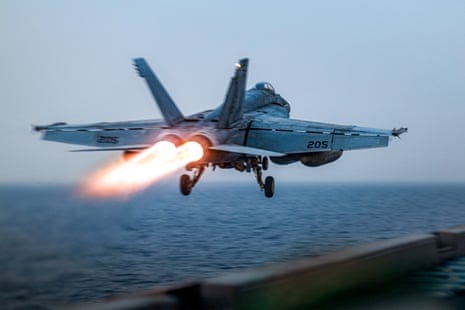
Trump thinks he’s so fucking macho. He takes a briefing, he picks up a phone, and thousands of miles away, jets take off from aircraft carriers, and 1,000-pound bombs start dropping on what they constantly refer to as “targets” in Iran.
Whoop-de-fucking-doo. One of the first “targets” his missiles hit after the war began on February 28 was the girl’s school in Iran that Trump’s war planners thought was part of a military facility. It wasn’t. They were looking at out-of-date maps and satellite photos.
But damn! They blew the hell out of that school! A photo of the school taken after the U.S. Tomahawk missile hit shows a building missing half its structure. But they didn’t have to knock down the whole building to kill about 175 schoolgirls and teachers. The blast radius of a cruise missile carrying a 1,000-pound warhead is only about 50 feet, but it can kill people who are about twice as far away as that.
Man, that sounds powerful, doesn’t it? A 1,000-pound bomb dropped from an F-14 fighter flying off an aircraft carrier has a lethal blast radius of about 150 to 400 feet. One of these bombs, which are highly likely to be the kinds of munitions that will be used if Trump orders another attack from the air on Iran, will be able to take out buildings and kill dozens, if not hundreds, of people if they are near the so-called “infrastructure” that Trump will assure us are the “targets.”
It’s all mil-speak for how deadly and destructive U.S. bombs and missiles are. We have tens of thousands of 1,000-pound bombs, thousands of 2,000-pound bombs. These were the same bombs Israel used on Gaza – yes, they dropped bombs supplied by the U.S., which had to resupply them, Israel’s bombing was so heavy. It’s hard to know exactly how many bombs Israel dropped on Gaza, but I’ve seen figures of 85,000 to 200,000 tons, more than the tonnage dropped on Dresden, Hamburg, and London combined during World War II, according to authoritative estimates.
But consider this: Gaza is about 25 miles long and about 5 miles wide. Iran is 1,600 miles long, and about 800 miles wide, from Iran’s northeast to southwest. Gaza is 140 square miles. The metropolitan area of Iran’s capital of Tehran alone is 850 square miles, while the whole country is about 636 thousand square miles.
Are you getting the picture here? All those bombs dropped on Gaza didn’t knock out Hamas. Do you think an equivalent number of bombs dropped on Iran will end Trump’s war?
Not even a teeny-weeny chance. Warfare today is almost entirely asymmetrical. Ukraine is a tiny country compared to Russia. All those bombs and missiles and drones Russia used on Ukraine…for four fucking years…and Russia is about where they were back in the summer of 2022. Has Ukraine waved a white flag and given up because Russia is about 30 times as big as they are, with an economy 10 times the size of Ukraine’s?
How’s that war going for you, Vladdy my boy?
Who’s bigger than who doesn’t matter anymore. Ukraine can build drones and missiles underground for as long as it takes. It doesn’t even matter that Trump has largely abandoned Ukraine. Europe took up the slack. This year, Russia is taking 30,000 to 35,000 casualties…per month…and it’s been worse in past years. Russia cannot recruit enough replacements to account for its losses. Some estimates say that Russia is running a deficit of 9,000 soldiers a month between its casualty losses and recruitment.
Iran, just by placing a few mines and getting on the single-sideband radio pressing the talk-button and threatening tankers in the Persian Gulf and the Indian Ocean, has completely stopped the oil trade passing through the Strait of Hormuz. No bullets. No bombs. No missiles. Just threats on a fucking radio by Iran and the world is screaming for the 20 percent of oil that isn’t coming out of the Persian Gulf.
Let’s just put it this way. Donald Trump can order the Navy to drop bombs and send missiles into Iran for as long as Israel bombed Gaza, about 18 months, and Iran won’t open the Strait of Hormuz, and their “nuclear dust?” That’s staying in a tunnel in a mountain. They’re not giving up on either count.
The problem with Trump’s likely new plan to bomb Iran is that “bomb” isn’t just a word. Bomb means bodies. Thousands of bodies. There will be families whose lives will be disrupted by loss of life, no electricity, having to move away from whatever areas that Trump declares to be “targets,” so there will be displaced persons in the hundreds of thousands if not millions.
But all that human misery will not win Trump his war.
Here’s the deal. War is hell, but hell isn’t enough to end wars anymore. Donald Trump is a flaming, ignorant asshole. The biggest problem he has is that the leaders of Iran know how big of an asshole he is, and they know something else, too: All they have to do is wait. Trump will revert to TACO. The clock is ticking. His poll numbers are crashing. The midterm elections are on the horizon. Trump can’t have a winless war going on with gas and food prices going through the roof and expect his political party to win in November.
He’ll probably order new bombing so he can feel better for a while, and then he’ll go back to whining on Truth Social about how mean Jimmy Kimmel is to him on late night TV.
He’s a loser, and Iran knows it. Now, I ask you: who do you think is going to “win” this unwinnable war?
We had a wonderful day with our cats and Ruby. It was sunny and warm in Northeast Pennsylvania. Trump is off to Mar a Lago to play golf. Another day in hell. To support my work, please consider becoming a paid subscriber.
Oliver plays this one as close to straight as I've ever seen him do, I suspect because he seems seriously and deeply angry about the damage being done by chatbots. This is worth a watch, but there are two points well worth underlining-
One, these bots were rushed to market long before any guardrails or responsible oversight were worked out (and really, our tech overlords don't seem in any hurry to work on them).
Two, the chatbots number one job is to get you to keep using the chatbot. They need you to upgrade to a paid version, and then they need you to stay with that bot as long and as often as possible, because that's how they maximize revenue. Again, the main job of the chatbot is to keep you talking to the chatbot.
As always, there is language of which my mother would not approve. But some of this is shocking-- I knew most of these stories, but to see it laid out, and hear the quotes from the techbros-- it's all very alarming. And a reminder that these bots should be nowhere near children.
Did you know Donald Trump flew to Palm Beach on Saturday for a “crypto conference” celebrating himself and his own utterly corrupt and failed $TRUMP cryptocurrency? A total of 297 fools who had bought the Trump crypto coin were declared “winners” of some kind of contest and heard Trump deliver the keynote speech of the conference. The top 29 “winners” were allowed to attend a “special VIP reception and champagne toast” with Trump where they could meet other celebrities he had chosen for the occasion such as former Republican Senate candidate Mike Tyson and “motivational speaker” Tony Robbins. Tyson is a convicted rapist who has been accused multiple times of sexual assault and harassment, and Robbins has been accused by 10 women of sexual harassment and unwanted touching. And let us not forget that Trump himself has been accused by dozens of women of sexual assault including rape.
Trump’s meme coin, by the way, was trading at or below $3.00 in the week leading up to his big “contest” with its “winners” who attended his crypto conference at Mar a Lago. The $TRUMP meme coin started its life at a worth of $75.00 each, meaning that those who bought enough of the things to go to the gala at Mar a Lago and quaff cheap champagne with the President of the United States, had lost 97 percent of the value of their investments by Saturday.
On the same day Trump was addressing his “winners” at Mar a Lago, he ordered his two real estate mouthpieces, Kushner and Witkoff, to cancel their trip to Pakistan for negotiations to end the war with Iran. That night Trump and his wife Melania attended the White House Correspondents Dinner in Washington, where a would-be assassin made an attempt to enter the Washington Hilton ballroom with a shotgun, handgun, and several knives trying to kill Trump. After the dinner was cancelled and Trump returned to the White House, Trump held a press conference at which he said that the attempt on his life justified the ballroom he has been trying to build where the East Wing once stood, because the ballroom will have bulletproof windows and an “anti-drone” roof.
Reports have revealed that the Trump administration did not put the Hilton Hotel on the maximum level of security for the White House Correspondents Dinner. The accused assassin was staying in a room on the hotel’s 10th floor and was able to check carrying luggage that contained the weapons he used on Saturday night. There were multiple reports after the event that people were able to walk into the hotel without showing identification or a room key. Tickets to the event at which Trump appeared were printed on paper, and there were no codes on the tickets that would have proved whether they were genuine. There was tighter security for the Taylor Swift “Eras” tour.
There is also a war going on. Peace talks have stalled or ended completely. We don’t know, because we are not being informed by the White House. At a time when 13 American lives have been lost and more than 400 soldiers, sailors, and Marines have been wounded and lives are still in danger in the Middle East because the war has not ended, The Secretary of Defense, who calls himself the Secretary of War, treated his friend Kid Rock to a joyride in an Apache helicopter at Fort Belvoir, Virginia. Apache helicopters have only two seats, for the pilot and co-pilot, but Hegseth and Kid Rock were given rides in the co-pilots’ seats in two helicopters, apparently so they could go up on their joyrides at the same time and talk to each other through their helmet communications headsets.
That’s what Hegseth did today in the middle of an ongoing war, where a third aircraft carrier just arrived on station in the Arabian Sea. Pentagon figures show that it costs between $5,000 and $5,500 an hour to operate an Apache helicopter. The Pentagon puts a figure of $12,651 per hour as a “reimbursement” figure if the Apache helicopter is used for non-governmental purposes. For each hour of flight, an Apache requires 35 hours of ground maintenance, which the Pentagon puts at $6,000 per hour, not including what they call “fuel and armament.”
The last time I checked, Kid Rock was not a government employee, but who knows? Maybe Hegseth appointed him Secretary of the Navy. He needs a new one.
Oh, almost forgot. The Strait of Hormuz remains closed, locking 20 percent of the world’s oil in the Persian Gulf. Oil prices remain above $100 a barrel and U.S. gas prices are over $4.00 a gallon in most of the country. In parts of the rest of the world, where there is no domestic oil production and refinery capability, gas is being rationed and airlines are cancelling flights because of the price or complete unavailability of jet fuel. In this country, airline prices are expected to go up steeply during the high-travel summer vacation time.
Not to worry. Trump is still ordering marble from Italy for his “America first” ballroom and overseeing an attempt to redo the columns in the front of the White House, turning them from Doric to Corinthian in design, because it’s fancier, or something.
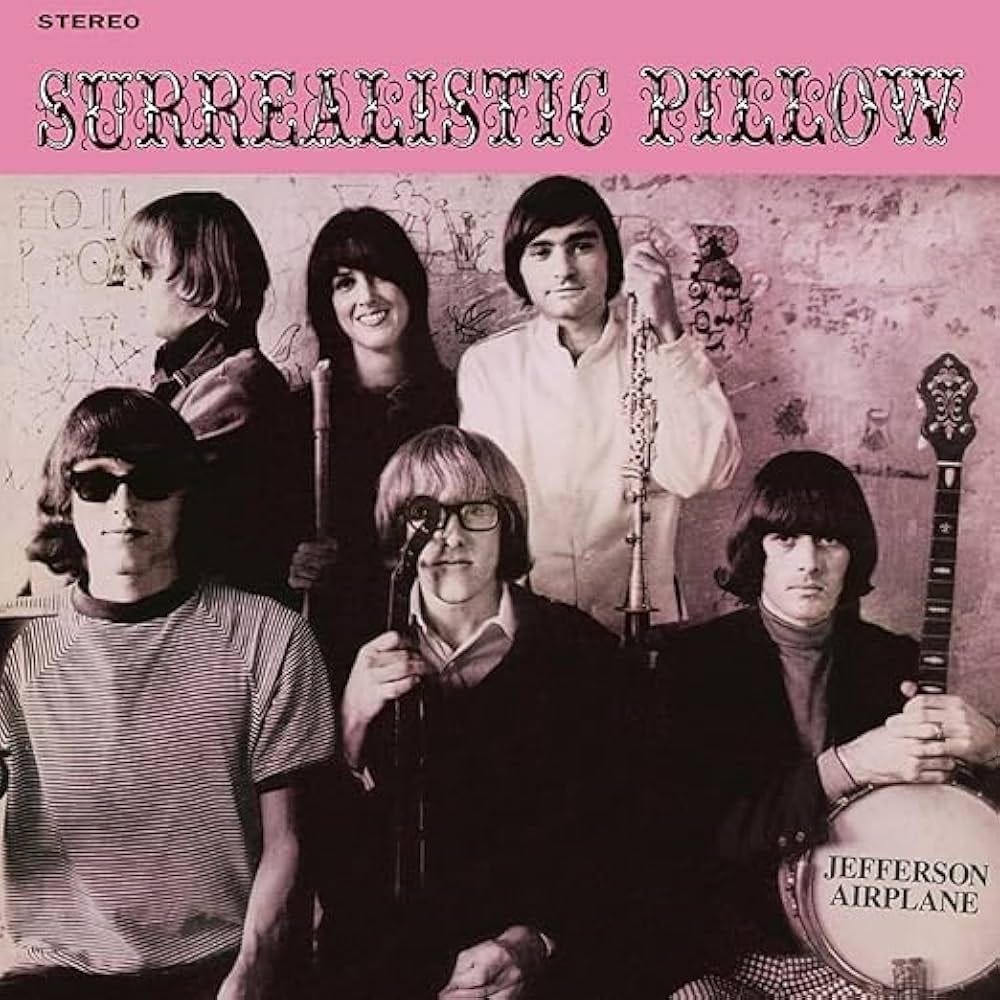
I wonder if the Jefferson Airplane knew that they were talking about our future when they wrote and recorded “White Rabbit” for their album, Surrealistic Pillow.
When logic and proportion Have fallen sloppy dead And the White Knight is talking backwards And the Red Queen’s off with her head Remember what the dormouse said Feed your head Feed your head
Think about this for a moment: our heads are getting fed to bursting every day by a lunatic who falls asleep in his chair in the Oval Office in front of 30 people, including members of the White House press corps, who saw nothing wrong with inviting him to be the keynote speaker at their big dinner after the keynote speech he gave that same day at his meme coin fest at Mar a Lago. I’m still trying to figure out why they didn’t just combine the two and call it “Saturday Night with Meme Coins and Media.”
One day we’ll wake up from this bad dream, and we’ll look around and see if there’s anything left.
Have you found yourself saying “wake me up when it’s over?” So have I, but I’m staying awake to cover these fools and bring their crimes to light for you. To support my work, please consider becoming a paid subscriber.
When logic and proportion Have fallen sloppy dead And the White Knight is talking backwards And the Red Queen’s off with her head Remember what the dormouse said Feed your head Feed your head
The international oil market is parked outside the Persian Gulf.
Oil briefly touched $120 a barrel today. Gas prices in the U.S. are $4.23 a gallon, or so we’re being told. Across the Delaware from me here in Northeast Pennsylvania, I paid $3.81 recently. I’ve seen photos of gas station signs from California that show regular gas over $6.00 a gallon, and I read that it’s $7.00 in Menlo Park.
In Europe, gas is over $8.00, in some places in France, more than $9.00 a gallon, but those prices reflect sky-high taxes that can be 50 percent of the real cost of the gas itself. Which is why you see tiny cars on the road everywhere in Europe, and I’m talking cars that hold two people and have two-cylinder and three-cylinder engines.
We’re beginning to see the real cost of Trump’s war on Iran. World oil markets are in freefall. Twenty percent of the world’s oil is locked up in the Persian Gulf. Much of the world has been able to adjust, with countries dipping into their oil and gas reserves to prevent prices from going even higher, and in some cases, just to keep cars on the road.
Countries that don’t have their own oil are looking to other markets, like Venezuela and Argentina and Brazil. We’re coming up on 60 days of Trump’s war, but markets cannot adjust overnight. Countries with oil have to ramp up drilling, and they have to build new pipelines and storage tanks to handle the extra oil they’re drilling. Then they have to ship the oil to the countries that don’t have their own oil. Not much changes in the greater scheme of oil production and refining in 60 days. But what changes very, very quickly are prices. Take 20 percent of the world’s oil supply out of the market, and you’ve got real trouble, which is where we are right now.
The oil business is dirty and messy and dangerous. I just saw a story about a huge oil spill and fire at a Russian refinery in the Black Sea port of Tuapse. People were injured by the refined products burning. Ukraine hit the refinery and shipping areas with drones three times this month, part of its defense against Russian aggression. Look what happened: The sea and air and land fouled, residents described “black rain” falling in their neighborhoods, a massive black cloud over the city, and yet another source of oil for the world market taken off the board.
Donald Trump told a gigantic lie that Iran was an “imminent threat” to the United States. Iran was no such thing. They don’t have a nuclear weapon, not even one, and Iran does not have a missile capable of hitting the Atlantic Ocean, much less the east coast of the United States. Sixty days into Trump’s war, and our bombs and missiles haven’t destroyed even an ounce of Iran’s “nuclear dust,” as Trump calls it – the stock of uranium that Iran has been able to enrich to 60 percent, just short of what they would need to build a bomb.
Trump and Hegseth were told by Chairman of the Joint Chiefs of Staff General Dan Caine that Iran was likely to blockade the Strait of Hormuz. These two macho warriors were so full of themselves and so fucking stupid that they didn’t listen to their own military expert. The Pentagon has been game-planning for a war with Iran for decades. Trump himself stole one of the Pentagon’s top-secret Iran war plans when he left the White House in 2021 and famously showed it to several people at his golf club in Bedminster, New Jersey.
But Pentagon war plans are written in words on paper. They aren’t videos. Trump famously doesn’t read. He didn’t even read the executive orders he signed. Trump probably didn’t read the war plan he stole. He just wanted it to wave around and show everyone how powerful he still was, even though he had lost the election.
So, were Trump and Hegseth ready for Iran’s closure of the Strait of Hormuz? No, they were not. It’s likely that Trump was not even aware of the extent of the damage Iran’s blockade would do to the world’s oil market. He certainly has not acted as if he knew what would happen to world oil prices and the price of gas here in the U.S. It is very likely that Trump did not even know what the average price of gas was on February 28 when he ordered the start of the war, because he has never personally bought gas at gas station. He has been backing and filling ever since, telling one lie after another: Prices will go back down. They won’t stay high for long.
Trump is treating the effects of his war with Iran the same way he treated COVID. Remember that insanity? COVID is going to just go away on its own. There are only a few cases. It can be cured by injecting bleach or sunlight or whatever the hell he was saying.
Now, he appears to think that he can cure his war with Iran by blockading Iran’s ports and keeping them from selling their oil. He’s finding out that Iran can take a lot of punishment and still stand up to him. They won’t stop their blockade of the Strait of Hormuz. It’s their leverage. They won’t give up their nuclear dust, either.
So, what is Trump going to do? Well, today he called his friend Vladimir Putin, because that is what powerful leaders do, who are stuck in wars they started. They talk to each other, probably assuring one another that they haven’t made mistakes with their wars, that they hold all the cards, that each of them is, as Trump has taken to referring to himself privately, the “most powerful man who ever lived.”
Can you imagine that phone call? Trump dropped the sanctions the U.S. had imposed on Russian oil, because…well, because there isn’t enough oil on the world market, and he wants prices to go down, so let’s let Russia loose to sell some oil and make some money, oil starts selling for $100 a barrel and more. So, the two of them are talking about all the money they’re making, Trump is bragging about the oil money he extorted from Venezuela, he’s bragging about the big meeting he had with oil executives yesterday, because of course he’s extorting money from them, now that he’s pushed oil prices over a hundred bucks a barrel, and they can start reopening oil wells that were not profitable and drilling new ones. So gimme money. Give money to Republican House and Senate candidates but give it through my superPAC so I can take my share.
And nayh-nyah-nyah, I’ve got a bigger plane with more gold than you do, Vladimir. Let’s see you match that!
What do you think Trump is going to do now? He says he won’t accept Iran’s latest offer to open the Strait of Hormuz if the U.S. will end our blockade, probably because he would be seen as caving in to an offer made by Iran, not presented to Iran by him. Seymour Hersh, who still has excellent sources in Israel, reported today that Trump is going to release $25 billion or so in frozen Iranian assets to get them to open the Strait. This theory is based on Trump’s notorious impatience. He could maintain the U.S. part of the co-blockade of the Strait and just wait out the Iranians.
But it took him only 40 days to give Iran a ceasefire they didn’t even ask for. It’s less than a month later, and he is apparently thinking of just paying off Iran to get them to reopen the Strait, so Republicans won’t get killed in the midterm elections, which they will be anyway, even if gas prices go down.
I think he’s going to order some more bombing, this time taking out some bridges that had not been hit, and some Iranian oil facilities. What is Iran going to do if they reach a deal on the blockade when their oil storage tanks have been destroyed and they don’t have any oil to sell? Plus, Hegseth took such a beating at the House hearing today, he’s going to want to do some bombing, like lifting some weights and doing some pushups to show everybody how manly he is.
But that leaves Iran’s nuclear dust. I think at this point Trump would just say, fuck it, let them have their nuclear dust. Except for one horrifying thing for Trump: the specter of Barrack Obama’s and John Kerry’s nuclear deal with Iran. If Trump can’t make a better deal than they did, he’s lost. That humiliation is what he fears most of all.
You know what? The world is starved for oil right now, with gas and liquified natural gas rationing already happening in some places, all because Obama made fun of him at a White House Correspondents dinner 15 years ago, and Obama made a deal with Iran that Trump threw in the trash and said he could get a better deal, or he could completely knock out Iran’s nuclear program.
Now at the 60-day mark, he is learning that Iran is a harder problem than it seemed when considered from the 6th tee at his Doral golf club.
He’s stuck. He doesn’t know what to do. He’s so addled, that in the Oval Office today, during one of his back-and-forth sessions with the press, when he was asked about the problem he is having ending his war with Iran, Donald Trump confused Iran with Ukraine:
I think Ukraine militarily, they’re defeated, okay. You wouldn’t know that by reading the fake news, but militarily, look, their navy– so they had 159 ships. Every ship is right now underwater. Typically, that’s pretty good.
He rambled on about Iran’s money being useless and inflation “like nobody’s ever seen before,” and then he said this…about Iran.
Do you think they’re doing well where they have no navy, no air force, no anti-aircraft apparatus other than what they may have put there. They may have brought in some light stuff during the cease fire. And we know exactly where it is. So it will be knocked out within the first 15 minutes.
He just said that Iran’s, or Ukraine’s, or somebody’s anti-aircraft apparatus “will be” knocked out in the first 15 minutes.
He’s telling secrets right there in the Oval Office. You read it here first: Iran will be bombed again, and soon. Let’s just hope he orders Hegseth to hit Iran and not Ukraine by mistake…or maybe not by mistake. Maybe he told Vlad he’ll help him bomb the Ukrainians.
With this out-of-control dementia patient loose in the White House, anything is possible.
I love this job. I mean, I really, really love it. I write this column every day and together, we’re going to run this asshole and his party out of power. To support my work, please consider buying a subscription.
I walk more gently now. It’s not because my knee aches or my hip hurts, though they do sometimes.
It began over six years ago. Shaken awake by my nervous system, all night and every night, I fell into a deep hole of exhaustion.
Two years seeing five neurologists and trying a dozen medications taught me that regaining my life wasn’t a pill away.
“My heart still pounds at night,” I told my doctor. He recommended breathwork. Not a little breathwork. A lot. I breathed in for 4 seconds and out for 6. I did this for 20 minutes, twice per day, for months.
Then I saw it.
I saw that I did everything from a place of stress. I was intense all the time. Work wasn’t just getting the job done, it was pounding the keyboard as fast and hard as possible, demanding the highest standards in the least time. Recreation was just another box to check on the to-do list. My nervous system was telling me it couldn’t take it anymore, not if I wanted to sleep anyway.
My intense self would have to go. In a moment, I threw him out, banished him. This was the hardest breakup I’ve ever experienced.
Hard because he was the center of my life, the organizing principle, the motivator, the achiever. For him and his accomplishments, I was rewarded. He was how I excelled in school and in the workplace. He was how I managed at home, stayed on top of it all. Without him, who was I? How would I do anything?
Then I found a path out, not all at once, but little by little. I could not change my nervous system so that I could return to who I was, but I could transform my relationship with it — with myself — to become who I needed to be.
How? I had no idea, so I did everything I could think of: therapy, journaling, meditation, dancing alone, dancing with trees, walking miles barefoot, drawing, painting. I even painted with my feet! Gradually, over time, transformation arrived as grief faded. I learned to live with and love my nervous system, to love myself.
Loving myself required removing layers of armor I’d worn so long I couldn’t see or feel. It takes bravery to remove the armor, to drop the shield. We are designed to fear the arrows of pain, disappointment, and misfortune, so we guard. But very few arrows come from outside. Almost all are from inside. Armor to protect from the world also shields us from ourselves.
The shield is always at the ready. The first sight of an external threat and BAM! Up it goes. There’s almost no chance of harm getting through. Knowing that, bravery comes more easily. The risk of lowering it is smaller than it feels.
The more time I spend with less armor, the more I feel what the deep breath reaches. Into my core it finds that I am OK just as I am — fully and fundamentally, as a birthright.
I am not different from you in these ways. Your mind messes with you as much as mine does me. Our minds tell us: “If I hadn’t…,” “If only I could…,” “When I finally lose (or gain)…,” “This will not end well.” The truth is, the ends of our minds’ stories are not yet written. The ends we fear rarely arrive.
If we bravely breathe deeply, for long enough — 20 minutes, twice a day, for months if needed — we might shed some heavy armor. Without it, one really can walk more gently.
 Log in