Crusading against evil since ...
3823 stories
·
1 follower

Ep. 123: America Is Sick & Tired

1 Share

Project 2025 is a blueprint for the New Age of American Eugenics. It strips healthcare and social services from the sick, the poor, the disabled, and everyone else people like RFK Jr. deem to be “unfit.”

The goal is to cull the herd of the “weak” so only the “strong” will survive. In this warped view of the world, getting cancer is a personal failing. Being injured in an accident means you were not smart or strong enough and should be abandoned. Being born with a disability means you should be thrown to the wolves.

Republicans view those who require care as a drain on society. This never applies to their loved ones or themselves, of course. They are such an obvious net benefit to society that unlimited healthcare is in order. But the rest of us? Disposable.

These are the policies of atrocity and genocide. These are the policies of Nazis.

#NurembergThemAll

The Opinionated Ogre Podcast is 100% listener-supported. Please help us continue to inform/amuse/outrage you by becoming a supporting subscriber today for only $5 a month or just $50 a year (a 17% discount!)! If not, it’s all good. Welcome to the Ogre Nation anyway!

If subscriptions aren’t your thing, you can leave a one-time PayPal or Venmo tip instead!


Ogre Nation Deep Dive: America’s Failing Healthcare 2:00 - 28:40

2:00 - 12:05 The regime deliberately created a public health crisis by gutting Medicaid

12:06 - 19:10 Breaking the CDC and the NIH leaves us vulnerable; also intentional

19:11 - 23:00 Ending foreign aid makes MAGAts happy but puts us all at risk.

23:01 - 28:40 The New Age of American Eugenics

Headlines for Short Attention Spans 29:45 - 49:10

29:45 - 32:18 Trump, the “peace president,” once again has an insane amount of firepower in the Middle East

32:19 - 35:30 Republicans are hilariously threatening to arrest Democrats for investigating the treason and corruption of the regime

35:31 - 38:45 Marco Rubio and Pete Hegseth go full fasch. Again.

38:46 - 42:50 The sewer rats are fighting for control of the GOP. Good.

42:51 - 49:10 We got Alaska! 56 Senate Seats! Eat a bag of dicks, you fascist fucks!

Self-care of the Week 49:11 - 52:00

53:48 - 58:30 Post-show chat about Hakeem Jeffries as Speaker of the House and how we need to move forward as a party.


The Unedited Hotmess Livestream!


Download audio: https://api.substack.com/feed/podcast/225437146/3d21ebd0a704ebc4077e0692f7d0ce86.mp3
Read the whole story
DGA51
1 hour ago
reply
Central Pennsyltucky
Share this story
Delete

A day off at West Point

1 Comment
Photo: Benny Biesmans

My unbelievably wonderful sister Ginny and her unbelievably wonderful husband, Benny Biesmans, are visiting from their home in Phoenix. Neither had been to West Point, which the Truscott family has some history with going all the way back to 1802 when our ancestor Thomas Jefferson founded the joint. The place is like the vault at Fort Knox these days, and in point of fact, West Point has its very own bullion depository only a mile or so from where the above photograph was taken. You have to go to the Visitors Center in Highland Falls and present your Real ID, plus recommendations affirming your patriotism, trustworthiness, and loyalty to the U.S.A. from at least 48 other Americans, not including family members, in order to get a pass onto the post.

Just kidding about everything other than the Real ID part.

It is a kind of fortress, however, to prevent acts of terrorism and under Hegseth, one would presume attacks from DEI. I was telling Tracy and Ginny and Benny that the fortress thing used to be the other way around in my day, when West Point took it upon itself to turn the place into a prison to keep Cadets in and prevent them from polluting themselves in the world on the other side of the gates, which in my era, the 1960’s, included hippies, protesters, pot, porno bookstores in Times Square, and the general populace of untrustworthy civilians.

But West Point let us in, and we drove around for awhile, and I got to point out some of the sights, such as Thayer Hall, where I took most of my academic classes, and which in my father’s day in the 1940’s was the Cadet Riding Hall, where every cadet was required to take — and pass — equestrianship. My father, having grown up the son of a cavalryman and ridden his first Army polo pony with a racket in his hand when he was five years old, was one of the best players on the Army team.

We then visited the grave of my maternal grandfather, Bartley M. Harloe, West Point class of 1918. He was an Army Engineer who spent a long career in the Army Corps of Engineers building infrastructure projects in this country and the Philippines. His Corps of Engineer unit built most of the locks on the Mississippi River, after which he was given the job of running the Corps of Engineers for the Works Project Administration. Among other projects he oversaw was building National Airport on landfill in the Potomac River. In the 1930’s, he was in charge of the Corps of Engineers WPA role in building thousands of bridges over small streams around the country that enabled farmers to reach land bisected by streams that they had had to drive their tractors sometimes a dozen miles or more to cross to get to their fields. You can identify those WPA bridges by their distinctive concrete balusters along their sides, at both end of which “WPA” can be found cast into the concrete.

I’m very proud of my maternal grandfather. He ended up being run out of the Army by Congressman Claude Pepper for refusing to use WPA and Corps of Engineer labor and materials to land-fill a vast acreage of Florida swamps Pepper wanted to develop into housing to sell to veterans after World War II. Later in life, my grandfather was Professor of Mathematics at the University of Hawaii. He was a great man and one of the many, many unsung heroes buried in the West Point Cemetery.

My sister wanted to hear some funny stories from when I was a cadet, so as we drove through the Academy today, I told her about one of the girlfriends I had when I was a West Point. She was a student at Ladycliff, a small Catholic college just off the campus of West Point in Highland Falls. I met her at one of the informal mixers Ladycliff held on the weekends. She was an inch or two taller than me and one of the prettiest things I had ever laid eyes on. I told her the night we met as we danced to Wilson Pickett and Major Lance and the Temptations played on a scratchy stereo at the mixer that I’d been at West Point for three years and had never considered that someone like her had been less than 100 yards away outside the gate all that time. She liked that.

We took an immediate liking to each other and dated for several weeks, and then one weekend she got her family’s car and we drove down to Greenwood Lake, a long body of water not far south of West Point that spanned the border between New Jersey and New York. The North end of the lake was lined with bars that featured live bands. The area had a kind of resort vibe. We danced for awhile and were sitting at a table in one of the lakeside bars when a man in a very shiny suit smoking a very large cigar who had two other similarly attired men with him stopped at the table and introduced himself and said he “owned the joint.” He bought a round for the table and kind of invited himself to sit down. We were telling him how much we enjoyed the band that night, when he just leaned back in his chair and looked at my girlfriend and said to her, How would you like to earn $100 a night dancing topless? He explained that he owned a chain of topless “joints” in Northern New Jersey, and she was just the kind of wholesome girl he was looking for. The job would be Friday and Saturday nights, and he’d pay her in cash. Did I mention that my Ladycliff girlfriend was, uh, well endowed? She was.

She leaned over and asked me what I thought. One hundred dollars was an unknowably large sum of money in 1968. I didn’t see how she could resist that kind of payday. She didn’t either. She told the guy in the shiny suit smoking the cigar that he was on. He stood up and said, You can start tonight, honey. He counted five 20’s off a wad of bills and handed them across the table. She took the money and explained to the guy that she was driving and if she went to work tonight in New Jersey, I wouldn’t have a ride back to West Point. The shiny suit guy signaled to one of his accomplices. Take the man back to West Point, Vinnie, will ya?

We followed them out the door. They got into a black Caddy. Vinnie escorted me to a white one that was just as long and shone just as brightly in the neon lights of the bar, and he drove me back to the barracks.

It was the last time I saw her. I have to say, she was a good dancer.

I am reliably informed that new AI disasters and tech stoppages await. I’ll be back to work tomorrow covering the nitwits who have yet to figure out what has happened and why and how. To support my work, please consider becoming a paid subscriber.

Leave a comment

Share

Give a gift subscription

Read the whole story
DGA51
7 hours ago
reply
When we lived in Cornwall, a family friend was Sports Information Director at the point so we got to swim at one of the ponds where we occasionally saw a cadet diving off the high tower.
Central Pennsyltucky
Share this story
Delete

Nearly Every Candidate Who Ran on Childcare Won. Now Comes the Hard Part.

1 Share

19th News Logo

What Was Once Considered a Niche Issue for Mothers To Solve Became a Central Campaign Promise. What Can Lawmakers Actually Do To Turn That Momentum Into Policy?

Almost every Democrat who flipped a Republican seat in the midterms had the same thing on their platform: childcare.

A decade ago, a plan for childcare was nowhere to be found on political priority lists. Now, it’s almost a requirement for Democrats, and even some Republicans, running for office. In contested seats this midterm elections, Republicans offered solutions like a tax credit for childcare expenses or incentivizing companies to offer childcare.

Democrats went even further on the issue than they ever have, with breakout candidates including Michigan Sen.-elect Abdul El-Sayed and Colorado Rep.-elect Melat Kiros calling for universal childcare, a policy seen as radical until 2025, the year it became reality in New Mexico and a central plank in the platform of New York City Mayor Zohran Mamdani.

Childcare was often relegated to the side because it affected a small percentage of the electorate. But this cycle, it was folded into overall affordability, said Elliot Haspel, a national child care expert who has written two books on the subject.

“If you make it this avatar of how unaffordable family life has become in America, then all of a sudden it’s got an enormous amount of narrative power,” Haspel said.

Democrat Lindsay James, who flipped a Republican House seat to become one of more than a dozen freshman mothers joining the House this upcoming Congress, said childcare came up again and again in rural Iowa, where options are limited. Her family spent a year on a waiting list to get into a center.

“Everywhere I go, people are talking about the cost-of-living crisis in this district,” James said. “And it comes in the form of the cost of groceries, gasoline, utility bills, the cost of health insurance, the cost of childcare.”

In almost every state, childcare costs top family budgets alongside rent and mortgage. In some families, childcare is the top expense. In a September poll from The 19th and YouGov, 52 percent of Americans said they wanted the government to spend more on childcare.

For many years, though, the issue was viewed as something the government should not take on for middle- and even higher-income families. In 1971, when President Richard Nixon vetoed a bipartisan bill that would have created a national childcare system, he argued the government’s involvement should be kept to “an absolute minimum.” And that’s how it went for 50 years, until COVID-19 reshaped the nation’s understanding of the role childcare plays in helping working parents stay in the labor force. State and local governments have shown that we can go further, and voters have shown they want more of it.

“Childcare is no longer seen as a personal problem that women have to fix, but an economic one that the nation needs to solve. Childcare is the linchpin of affordability,” said Reshma Saujani, the founder and CEO of Moms First, an organization pushing for affordable care and other family policies. “It’s also not an issue that’s on page 15 of a candidate’s platform. It’s the issue they’re getting elected on.”

Now, there’s a solid chance substantial childcare legislation could pass at every level of government. Here’s what we could see in the next two years.

Childcare at the Federal Level

After the election, Rep. Hakeem Jeffries, the Democrat from New York expected to be the next speaker of the House, said the top issues voters want Congress to confront are costs, corruption and care. “That’s healthcare, childcare and elder care,” he said. Jeffries will likely be joined by Rep. Katherine Clark, who has been a leading voice on childcare in the House for years. Now, she’s poised to become the first woman House majority leader, which means “she will have so much influence in setting the agenda,” Haspel said.

On the Senate side, Minority Leader Chuck Schumer has laid out the five areas Democrats want to go after now that they have a majority in the chamber: “healthcare, electric costs, groceries related to the tariffs, and how much you pay for childcare and housing.” Sens. Elizabeth Warren and Patty Murray, who have been key authors of major childcare proposals for years, will also have new seats of power. In the next Congress, Warren will be the chair of the Senate Banking Committee and Murray will take over as chair of the Senate Appropriations Committee.

In a speech Tuesday, Warren made it clear that she intends to advance childcare policy she’s been pushing for years. Democrats can move forward on their priorities through a reconciliation package that won’t require a single Republican vote, she noted. Potential avenues they could pursue: “reverse the healthcare cuts the Republicans put in place, expand healthcare coverage, and fund universal childcare — all with a 51-vote majority in the Senate,” she said.

Longtime childcare candidates will also no longer be among the few in their respective chambers. During the campaign cycle, six of the eight Democrats who flipped Senate seats had childcare plans in their platforms (Maine’s Troy Jackson, Ohio’s Sherrod Brown, South Carolina’s Annie Andrews, Texas’ James Talarico, Iowa’s Josh Turek, and North Carolina’s Roy Cooper). In the House, 44 Democrats flipped Republican seats so far and about half of them had childcare proposals, including Pennsylvania’s Bob Brooks and Michigan’s Christina Hines, who both advocated for universal pre-K.

It’s not a question now of whether childcare will come up at the federal level, but how.

If the next Congress decides to go for a more modest childcare proposal, it could look like a federal version of what Jackson proposed earlier this year when he was running for governor of Maine before switching to a Senate campaign. Jackson offered a plan that would make childcare free for families earning up to 125 percent of the state median income, or about $145,000 annually for a family of four.

Or it could look like what Texas’ Talarico suggested in his campaign: capping tuition for 3- and 4-year-olds in pre-K at 7 percent of the family’s total income, which is what the Department of Health and Human Services has set as the benchmark for affordability. Talarico also wants to boost funding for Head Start and the Child Care and Development Block Grant, the two federal programs that subsidize care for the nation’s poorest children. Talarico also proposed offering childcare facilities federal tax breaks and companies that support childcare a tax credit.

Because overriding a veto takes two-thirds of each chamber, Democrats have to consider how President Donald Trump may respond to a bill that reaches his desk. The president said during an Easter lunch reception at the White House that “the United States can’t take care of day care. That has to be up to a state.”

Haspel believes Democrats have a path forward with a “skinny” reconciliation package that is just focused on care priorities such as passing some form of federal paid parental leave, improving the child tax credit and perhaps doubling or tripling the funding in the childcare block grant so more families can access subsidized care. Something like that would mean the president would have to “think really hard about vetoing,” Haspel said.

Saujani hopes politicians push for something even more ambitious than they did last time Democrats tried to expand childcare through budget reconciliation. Under President Joe Biden, a package called Build Back Better that would have created a universal pre-K program never passed the Senate.

“We need to think even bigger than we did with Build Back Better. Don’t just dust off Biden’s plan and run it back. The opportunity here is to be bolder and more ambitious about what families actually need,” Saujani said.

If the next Congress goes more ambitious, it could lean into the universal childcare ideas that candidates like El-Sayed talked about extensively on the campaign trail. In an interview with “60 Minutes,” El-Sayed argued that the way to address the issue of falling birthrates and encourage people to have children is for the government to be an active player in lowering costs for families.

“You need to be invested,” he told “60 Minutes.” “That means you have to address the rising cost of having kids. So if your argument is that we can’t have childcare, we can’t have healthcare, we can’t subsidize housing, we can’t do these things, do not be surprised when all of a sudden we age past the point at which we are viable.”

Childcare at the State and Local Level

In state gubernatorial races, five Democrats flipped Republican seats, and all five had at least one childcare proposal on their platforms: Nevada’s Aaron Ford, Texas’ Gina Hinojosa, Georgia’s Keisha Lance Bottoms, Iowa’s Rob Sand and Ohio’s Amy Acton. In gubernatorial races overall, a majority of candidates who had some form of childcare proposal on their platform won, including all six candidates (all Democrats) who proposed universal childcare, according to an analysis by Bank Street College of Education.

In some states, governorships and legislative control also flipped, setting up Democrats to control the legislative and executive branches and giving candidates who support broader childcare proposals an opportunity to make inroads.

Experts are closely watching Wisconsin, Minnesota and Michigan, three states that now have a Democratic trifecta and that have been leaders in childcare policy for years. Wisconsin, in particular, may be interesting because there was a prolonged fight over childcare funding there between outgoing Democratic Gov. Tony Evers and the Republican-controlled legislature in recent years. Evers wanted to expand state funding significantly but ultimately had to reach a compromise with the state legislature for a smaller amount.

Now, the legislature is set to be under control of Democrats and David Crowley, who Evers endorsed, will take over as governor. Childcare policy expert Julie Kashen called Crowley a childcare “champion.” On the campaign trail, Crowley proposed a system under which all kids under the age of 5 have a spot in the state’s childcare subsidy program, and any costs not covered by the subsidy are capped at 7 percent of the family’s income.

“The new trifecta is really going to make a difference there,” Kashen said.

If Wisconsin moves to expand childcare, that could produce momentum in neighboring Minnesota and Michigan, states that have both already made substantial upgrades to their childcare systems to try to bring down costs.

“Do the Midwest states start competing for some form of universal childcare?” Haspel said, or does something similar happen in the West, where Nevada and Arizona now have Democratic trifectas near New Mexico? Both, he thinks, are possibilities.

Another open question now is whether any cities will follow in the model Mamdani created in New York. Los Angeles and Washington, D.C., both elected new democratic socialist mayors who have stated commitments to improving childcare. In L.A., Mayor-elect Nithya Raman wants to address the problem by improving supply, making it easier to open a center or expand an existing one.

In D.C., Mayor-elect Janeese Lewis George is focused on lowering costs. Her proposal includes capping all childcare payments at 7 percent of family income — families earning less than $100,000 a year would pay no more than $600 a month in childcare. Lewis George’s proposal was one of the most comprehensive this cycle, with ideas around how to boost more childcare supply, such as placing programs in existing public schools, and pushing to increase provider pay to be on par with public school teachers.

In crafting her plan, Lewis George told The Washington Post she took lessons from what New Mexico did. And during her victory speech last week, she called the issue out again as a top priority: “We will make childcare affordable and within reach,” she said.

Plans like Lewis George’s are bold, Saujani said — a sign that childcare has finally risen to the top of the priority list.

“The Overton window is opening, and we’re finally seeing politicians willing to imagine something bigger,” she said. “We shouldn’t be begging for scraps or settling for incremental improvements. Let’s make childcare free. Let’s have some imagination again.”

Correction: An earlier version of this article misstated how to override a veto.

This article was previously published by The 19th on November 16, 2026.


Frequently Asked Questions

Why did childcare become a major issue in the 2026 elections?

Childcare became closely tied to the broader cost-of-living and affordability crisis, with families facing high costs and limited access to care.

What childcare policies did candidates propose?

Proposals ranged from childcare tax credits and expanded subsidies to universal childcare, universal pre-K and caps on childcare costs based on family income.

What does universal childcare mean?

Universal childcare generally aims to make affordable care available to all families, often through substantial government funding that reduces or eliminates what parents pay.

How much of a family’s income is considered affordable for childcare?

The article highlights 7 percent of family income as an affordability benchmark used in several childcare proposals.

Could Congress pass major childcare legislation?

The article argues that childcare will likely receive significant attention in the next Congress. Options could include expanded childcare subsidies, paid parental leave, an enhanced child tax credit and increased funding for federal childcare programs.

Which federal programs currently help families pay for childcare?

Two major programs discussed in the article are Head Start and the Child Care and Development Block Grant, which help support childcare and early education for eligible families.

What could states do to make childcare more affordable?

States could expand childcare subsidies, cap families’ costs, fund universal programs, increase provider compensation and create incentives to expand childcare capacity.

Why is childcare considered an economic issue?

Affordable and accessible childcare can help parents remain in the workforce while reducing one of the largest expenses facing families, connecting childcare policy directly to employment and household affordability.

Are cities also considering childcare reforms?

Yes. The article describes local proposals that include income-based cost caps, expanding childcare facilities, using public schools for childcare programs and increasing pay for childcare providers.


“FREEDOM OF THE PRESS IS NOT JUST IMPORTANT TO DEMOCRACY, IT IS DEMOCRACY.” – Walter Cronkite. CLICK HERE to donate in support of our free and independent voice.

The post Nearly Every Candidate Who Ran on Childcare Won. Now Comes the Hard Part. appeared first on DCReport.org.

Read the whole story
DGA51
8 hours ago
reply
Central Pennsyltucky
Share this story
Delete

We beat this lying hypocritical Freedom Caucus shithead in Tennessee

1 Share

Victoria Broderick upsets Scott DesJarlais in Tennessee House contest
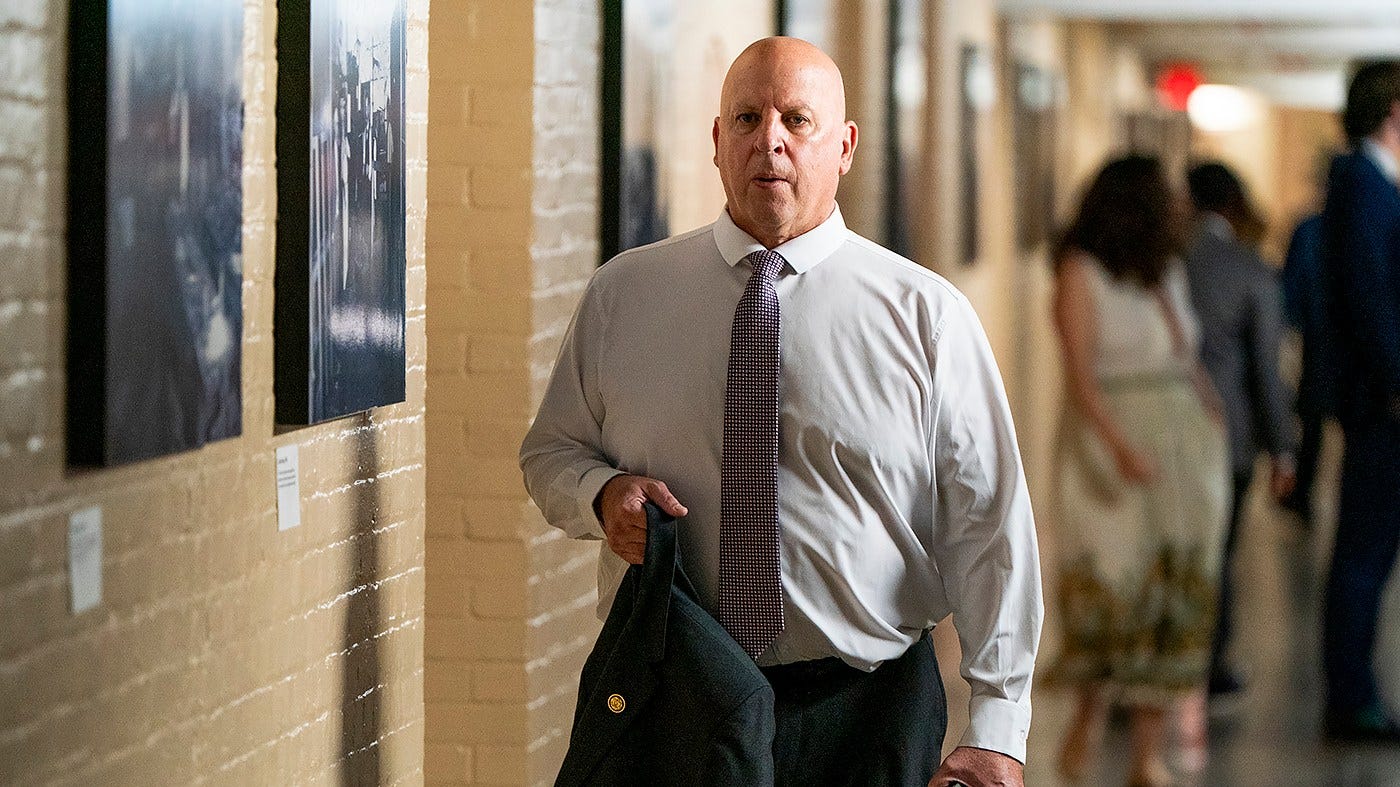
The contemptible DesJarlais walks down corridor in Congress: The Hill

With 435 members in the House of Representatives, there have always been a truckload of flaming assholes hiding in their offices along the long corridors of the House office buildings. Scott DesJarlais, an especially disgusting example of a sanctimonious Republican, has been one of them since he rode the Tea Party wave to represent a rural district in Tennessee in 2010.

He first came to my attention when I was living in a town just north of his district, so news about his carrying on got in the local papers. DesJarlais, a doctor, went through a contentious divorce in 2000, during which his wife accused him of being involved with a mistress. As a comparatively wealthy physician in rural Tennessee, of course he was. During the divorce, the tape of a conversation with the mistress emerged during which he encouraged her to get an abortion. DesJarlais’ wife admitted to having two abortions, which of course, Dr. DesJarlais paid for. This was during the days in Tennessee and the rest of the country when women had the right to control their own health decisions.

DesJarlais opposed that right. He voted repeatedly in the House on bills that had anti-abortion components.

After the divorce, it emerged that DesJarlais had admitted to having sexual relationships with three women who worked in his office, a medical equipment sales representative, and two of his own patients. One patient said that she had smoked pot with DesJarlais and said he had prescribed opioids for her when she was having sex with him at his house.

All that is par for the course for a redneck Republican House member from Tennessee. It’s the abortion stuff that should have stuck but didn’t. He did the whole “I asked for forgiveness and God forgave me thing,” and in rural Tennessee, back in the days of the Tea Party when white people were reacting with horror that somehow a Black man had snuck into the White House, the voters in the 4th District forgave DesJarlais, because at least he wasn’t Black, and he was a Christian.

Being white and a Christian counted for a lot in Tennessee. DesJarlais was accused by his wife during their divorce of “dry-firing” a gun outside her locked bedroom during a fight. She said he sat for three hours with the barrel of a pistol in his mouth threating to kill himself. She also accused him of shoving her, tripping her, and pushing her to the floor.

Real nice guy, in other words.

DesJarlais conceded to Democrat Victoria Broderick, who beat him in a House district that Trump won in 2024 by 24 percent. She is the only Democrat to win a seat in Congress in Tennessee this year. Republicans gerrymandered previously Democratic districts in Nashville and Memphis, and Democrats lost their races in those districts. The Cook Political Report said that Broderick’s win was the largest Congressional flip from Republican to Democrat in this year’s election.

DesJarlais has been a member of the arch-conservative Freedom Caucus and has maintained an A-plus rating from Susan B. Anthony Pro-Life America, the anti-abortion group that has donated to Republican candidates running for office for years.

Tennessee had passed a so-called anti-abortion “trigger law” that went into effect exactly 30 days after the Supreme Court ended the right to abortion in the Dobbs v. Jackson Womens Health Organization in June of 2022. Tennessee also passed a fetal heartbeat abortion ban and a ban on abortions based on gender, race, and a diagnosis of potentially fatal fetal disease during a rush of state anti-abortion laws that were passed before the Dobbs decision.

DesJarlais was in favor of the fetal heartbeat law and the Dobbs decision and was in favor of a national ban on abortion and defunding Planned Parenthood, which provided the only health care many underprivileged women received.

Because abortions for me and mine, but no abortions for you, has been the typical Republican attitude about the issue.

This is what a Blue Wave has accomplished. One of the sneaky little shithead hypocrite Republicans got beat by a decent Democrat in a part of Tennessee that no one expected would be flipped.

Yaaaaay!

This made me so happy, I had to memorialize it with a column. To support my work, please consider buying a subscription. All of us chez Harris-Truscott thank you.

Give a gift subscription

Leave a comment

Share

Read the whole story
DGA51
1 day ago
reply
Central Pennsyltucky
Share this story
Delete

The essay isn’t dead (but we need to fear AI in education nonetheless)

1 Comment

Amid all the doomsaying and soul-searching about what AI will do to academia, here is a positive story (and I know it’s a luxury position to have such small classes, and this cohort was particularly engaged and collaborative). I taught in a history of ideas class this year in our PPE master, and decided to go for essays as exams – but really loathed the prospects of having to read AI stuff. I get lots of AI-generated scam emails (suddenly, a book club in Australia really really wants to learn more about a volume on the reception of Hegel’s philosophy that I edited as a grad student…), and I really hate the bland, corporate, and sycophantic tone. For environmental reasons, I try to minimize AI use to where it might really have added value and save me some time – which, according to my non-representative sampling with n=1, is not very often. But back to the students.

As per our faculty policy, I requested an abstract to be sent to me for feedback beforehand, and planned a short oral checks with all students. I got 22 essay, none of which was AI written (or done so well that I didn’t notice at all). They were close to the texts we had read, asked intelligent questions about them, many brought in additional topics that they found interesting and applied the ideas of historical thinkers to them in a really thoughtful way. I got a sense from the students that they had made it a matter of honor not to use AI, but rather to take advantage of the opportunity to learn to write good essays.

I did not have to do any “checks”, in the end, but could have meaningful conversations with them about either the content, or about what it takes to write good philosophical texts. In the past, I had offered such feedback moments, together with written feedback, on a voluntary basis, but students hardly ever came. I realized that I should always have made them mandatory – the added value for the students seems quite high, and the time it takes for me is, in the grand scheme of things, negligible (again, the luxury of small classes…).

More generally speaking, my initial worries about how AI will undermine university teaching have changed in the last months. I remain convinced that what Dewey calls “the community of inquiry” retains its attraction (I here owe a lot to Éloise Soulier and Jason Branford, with whom I wrote a policy paper on AI in education and learned a lot about Dewey and education from them). It’s a social technique that is probably as old as human language: a few people sit together, in a room or in a cave or around a fire, and they discuss about things that matter to them. Those who already know more tell those who know less what they have learned over the years, they explain to them why certain assumptions might not hold, or why something is a logical fallacy. They use tools such as drawings, schemata, or written notes (once scripture was invented) to faciliate the learning process. They allow for discussion and questioning, because this is the best way for the human brain to learn and discover new things.*

What I no longer worry about – encouraged also by my fabulous students – is that this social technique would disappear. But what I do worry about is that it might become a privilege, even more than is currently already the case. Small-scale, maybe “electronics free” classes for the few, AI-based training and multiple choice tests for the many. Some governments might think: why pay for teachers for the hoi polloi if you can have personalized AI assistants?

But there is an interesting twist here. Those environments that are so resource poor that they cannot afford giving every student a digital device with internet access might, paradoxically, end up with better learning conditions than those where there is money (and political determination) to invest in AI for education.

It’s almost too painful to imagine a world in which even a fraction of what is currently being invested in AI was invested in human teachers. But maybe we could, for a second, imagine such a world? Or maybe we could imagine a world in which for every dollar invested in AI, there is a 20% tax that will be channelled directly into teacher training? (that’s an arbitrary number, it wouldn’t have to be a high %, at the moment, to have huge impact). Arguably, something like that would be a fair return to the teaching profession. It has, after all, been behind all the texts that Large Language Models are trained on, in the sense that it has taught someone, somewhere, to read and write!


* I’m not implying that there is no use at all for AI in education. But as we argue in the policy paper, AI often avoids precisely that (cognitive or interpersonal) friction that is most conducive to learning.

Read the whole story
DGA51
1 day ago
reply
AI does not rule.
Central Pennsyltucky
Share this story
Delete

An Ed Dudebro's Next Chapter

1 Share
I have to hand it to Jordan Adams, who has been dogged and determined in his drive to make anti-woke education fetch happen. Let me refresh your memory, then update you on his newest chapter.

Adams, you may recall, is the guy who started out working for Hillsdale College, helped Florida check textbooks for wokitude, then branched out to a one-man curriculum consulting firm (Vermilion Education). Moms for Liberty co-founder Bridget Ziegler tried to get him a gig with Sarasota schools in early 2023. Later that 2023 summer, Adams took a swing at Pennridge schools in Pennsylvania (part of the constellation of Bucks County schools taken over by MAGA culture panickers). Neither of those worked out, though he at least got started in Pennridge before they fired him and called his work "an embarrassment.". Adams did get a chance to strut his stuff at the 2023 Moms for Liberty gathering, where he laid out a program for using shock and awe to impose your right-wing agenda once you've been elected to the board.

His consultant website for Vermillion appears to have gone dark-- it now appears to be an Indonesian poker site. 

In 2024, Adams teamed up with the School Boards for Academic Excellence, a group launched by a bunch of right wing culture panic veterans to ride the post-covid wave in support of "academic excellence and parental rights."  Their first big press was an op-ed on the Fox News website headlined, "New school boards challenge woke bureaucracy that leaves kids behind" which gives you an idea of where they were headed. They threw a conference with Oklahoma's head education dudebro Ryan Walters.

Jordan Adams brings a wealth of experience and expertise to the table. With a background in curriculum development and educational consulting, Jordan has worked with school districts across the country to improve their curricula and enhance student learning outcomes. His approach is data-driven, evidence-based, and focused on achieving
Well, no. As far as I know, Adams was only hired at one district, started overhauling the curriculum, probably helped cost some right wingers their board election, and then had all his work rolled back.

SBAE appears a bit sleepy these days. Somebody is keeping their Facebook page alive, but their website's "analysis" tab was most recently updated in May 2025. The latest Form 990 on file is from 2024. 

Adams, however, has never flagged. He has kept blogging at "Red State Ed Reformer" and put pieces out here and there, like this piece from February about "Why conservatives keep losing school boards," that gives birth to this paragraph:
Like a ship deliberately rigged to run a crooked course, school board elections were structured decades ago to steer the vessel of public education first toward the interests of teacher unions; today they advance the radical Left’s ideological agenda, often at the expense of children’s learning, safety, and well-being.

He goes on to lay out the ways this field has been tilted--  off-cycle elections, "camouflage" of non-partisanship, teachers unions, and holding elections in school buildings (really). It's a real sore loser's list of imaginary problems. But it's a clear enough picture of where Adams has positioned himself.

It fits with his newest enterprise-- American Education Solutions or AES (an unfortunately common set of initials). Here's the pitch from the website:

American Education Solutions (AES) establishes a new standard for education quality: Combining findings from cognitive science and classical learning with a dedication to patriotic education rooted in America’s founding ideals, all delivered exclusively for America’s public schools.

The business here is, once again, education consulting, and I have to say once again that my hat is off to Adams for trying and trying to get this particular ship off the beach. This time, while Adams is the CEO and founder, he has some partners.

Tucker Cross: Director of Operations. Cross worked in the Oklahoma State Department of Education as Director of Policy & Research in 2023 and 2024, which would have put him in the department under Ryan Walters. In 2022 he helped start a--well, it looks like it was a sort of micro-school learning pod operation with three families, then folded in a few more families. Cross is headmaster of this school,  Telos Classical Christian School, which is "church focused" and "strives to serve as a natural extension of the church," which is Redeemer Reformed Church of Oklahoma City. That church is part of the Wycliff Communion of Reformed Evangelical Churches, and the CREC is the denomination founded in Moscow, Idaho at the church led by Douglas Wilson and whose most notorious member is currently Pete Hegseth, and we don't have time to go down that rabbit hole right now.

Samuel Lair: Director of Research. Lair is another Hillsdale grad. He's a Lincoln Fellow at the right wing Claremont Institute and writes for The Federalist. He used to work at the Idaho Freedom Foundation, a right tilted thinky tank that wants to "make Idaho into a Laboratory of Liberty by exposing, defeating, and replacing the state's socialist public policies." They run a Center for American Education which, among other things, maintains a map so you can see where schools are "indoctrinating students with leftist nonsense." They also recommend you get your child out of public school. (Famously fake Idaho school superintendent Brandon Durst also worked for IFF.)

Lair has also written some nifty pieces, like this one CTInsider reacting to the election of Abdul El-Sayed-- "Immigration fears are warranted." It's as bad as you can imagine. Lair argues that the Muslim population has been increasing swiftly, and that's because of policies that "are a stark departure from the old American tradition on immigration." You might have thought that the old tradition was pretty much everyone, like poor huddled masses yearning to breathe free. Lair is here to correct you:

That tradition was rooted in the conviction that “America must be kept American.” Our forefathers recognized that too much immigration from nations that are too disparate in culture, religion, and mores would change America’s regime of natural rights, self-government, and ordered liberty into something both foreign and undesirable. On this basis, they would have viewed mass immigration from the Islamic world, and elsewhere, as a threat to our political and cultural heritage.

There's more ahistoric nonsense that boils down to "we should stop letting in non-white non-Christians." This, remember, is the Director of Research for an organization that wants to advise schools on how to do education.

 Alexandra Miller: Classical education specialist. Miller was only just added to the team, and she appears to be the only one with any sort of serious classroom experience. She taught in Santa Ana for two years, then Anaheim for 11, then Tustin Unified for 7. In 2022 she pivoted to teaching secondary English and social studies in charter schools for four years, and just hung out her shingle as an independent consultant last August. On LinkedIn she says she was known for "fostering inclusive, engaging classrooms," so she and Lair should have some great conversations. Miller substacks, too (don't we all) and offers a "playbook." Her blog is offering "support for families who want to rear their children to become Great Americans" and includes posts like "Your kids aren't learning at all: your local public school is actively defrauding your family." She relocated from California to Idaho. Seems like she'll be a perfect fit for AES.

AES seems to be just launching. Adams posted about it earlier this month, announcing their Do No Harm audit, for which they'll look over your district's order and safety, instruction. subject areas, career-technical education, accountability, and recommendations for reconsideration. 

It looks much like the services that were offered by Vermillion, which did not exactly make an impressive splash in the education world. According to his LinkedIn profile, Adams taught two years at Founders Classical Academy in Lewisville, a tiny charter school (921 students K-12), then two years at St. Agnes School, a tiny Catholic school (822 students K-12), then became an instructional coach for Hillsdale for five years. On the strength of that experience, Adams feels confident in telling a school district everything it's doing wrong and how to do it right, top to bottom. 

It's not clear if AES has any actual clients yet. Its fundamental problem seems the same as Vermillion's. Schools that are already dewokified and classical and christianist nationalist don't need them for anything. Most school districts don't want them for anything. Their one hope for clients is school boards that have been commandeered by MAGA types, but the winds have not been blowing MAGA-ward for the past few years. And if they do get hired, they face another hurdle-- they have to produce reports that show some quality and educational expertise, especially enough to silence everyone who will be pissed off by the fact this very rightward outfit was hired in the first place. And so far, that level of quality and expertise seems to have escaped Adams' ventures. In other words, it's not enough to have a good pitch for getting the job-- you have to be able to do the job. 

AES is trying to hitch itself to the Science of Reading cart and taking some steps to shift focus to educational quality so that it's not just pitching culture panic issues. And with these sorts of folks, there's always a lurking question-- do they really believe all this right wing claptrap, or do they just believe it's the best marketing pitch to use?

Why write about this at all? I think sometimes the best way to follow what's happening in a movement is to follow the B or C level players, and I have an ongoing fascination with the education dudebros. Plus, it's important to notice how interconnected it all is. Am I worried that I'm providing free publicity for this operation? Doubt it-- I'm just a C level player myself, and their audience is not mine. And as I hinted above, though I think Adams is almost entirely wrong about education and I think AES is largely doomed, I'm impressed by his determination. If he's ever in the neighborhood, I'll gladly take him to lunch. In the meantime, I recommend that school boards not hire him. 

Read the whole story
DGA51
2 days ago
reply
Central Pennsyltucky
Share this story
Delete
Next Page of Stories