Crusading against evil since ...
3705 stories
·
1 follower

White House press corps misses an opportunity to stand up to tyranny

1 Share
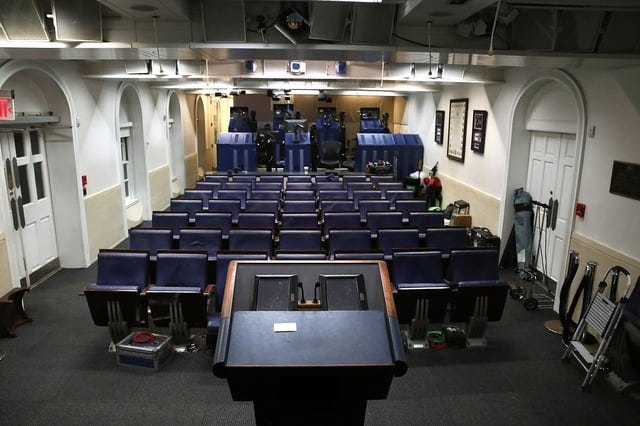
White House press room from the podium : r/AlternateAngles

This is what the White House press room could have looked like after MS NOW, CNN, and Politico reporters were turned away at the security gate of the White House today. The entire White House press could have walked out in protest of Donald Trump’s outrageous violation of the First Amendment. Three of the White House Press Association members’ right to report the news had been withdrawn by Trump who accused them of reporting “fake news.”

If the reports of those three outlets have been fake news, the reports from every White House correspondent has been fake news.

You stand up for your fellow journalists, or your failure to do so tells us everything we need to know about your courage and dedication to the job of being a journalist. Donald Trump shredded the First Amendment today, and the White House Press corps stood there and watched him do it. If they had stood together and walked out, we would be in a very different place today. They didn’t, and the profession of journalism has been endangered.

Access to power is not worth capitulation to fascism. At a bare minimum, the New York Times, the Washington Post, the Wall Street Journal, NBC News, ABC News, and CBS News should have notified the White House that they will not attend White House briefings until their fellow reporters’ rights are restored.

Shame on the White House press corps. Shame.

I wouldn’t take White House press credentials if they were offered to me. i can say everything I need to say about the criminal in the White House from right here. To support my work, please consider buying a subscription. We need to stick together and support independent journalism.

Give a gift subscription

Leave a comment

Share

Read the whole story
DGA51
5 hours ago
reply
Central Pennsyltucky
Share this story
Delete

What Is Vaginal Seeding?

1 Comment

When it comes to birth, there’s a lot more happening than simply welcoming a new baby into the world. During a vaginal delivery, newborns are naturally exposed to millions of beneficial microbes that begin colonizing their skin, mouth, and digestive tract.

In recent years, this early microbial exposure has sparked interest in a practice known as vaginal seeding, particularly among parents planning a cesarean delivery. But what exactly is vaginal seeding, and does it offer the benefits some people hope for? Researchers are actively studying the practice, yet many questions remain unanswered.

Understanding the science behind vaginal seeding and how it differs from other ways of supporting a healthy microbiome can help parents make informed decisions. Along the way, it’s also helpful to understand how URO Probiotics fit into the bigger picture of maintaining vaginal bacterial balance before and during pregnancy.

Vaginal Seeding 101

Vaginal seeding is a procedure intended to expose babies born by cesarean section (C-section) to some of the bacteria they may have encountered during a vaginal birth. Typically, a sterile piece of gauze is placed inside the mother’s vagina before the C-section . After the baby is delivered, the gauze is used to gently wipe the baby’s mouth, face, and body.

The idea behind the practice is simple: babies born vaginally naturally come into contact with their mother’s vaginal microbes as they pass through the birth canal, while babies delivered by C-section experience a different mix of bacteria. Vaginal seeding attempts to recreate at least part of that natural microbial exposure.

Why Do Some Parents Choose Vaginal Seeding?

Interest in vaginal seeding comes from growing research into the human microbiome, the vast collection of bacteria and other microorganisms that live throughout the body. Early microbial exposure may influence the development of an infant’s microbiome during the first weeks and months of life.

Some researchers are exploring whether differences in these early microbial communities could play a role in immune system development, digestion, allergies, asthma, or other aspects of long-term health. Because babies delivered by C-section encounter different bacteria than those born vaginally, some parents hope vaginal seeding may help narrow that gap.

What Does the Research Say So Far?

Early research has produced some encouraging observations, but the science is still in its early stages. A handful of small studies suggest that vaginal seeding may temporarily introduce some maternal vaginal bacteria to babies born by C-section.

In some cases, researchers observed that the infants’ microbiomes looked somewhat more similar to those of babies delivered vaginally. However, these findings should be interpreted carefully.

The studies have generally involved small numbers of participants, and scientists have not established whether these temporary microbial differences translate into lasting health benefits. Larger clinical trials are still needed to determine whether vaginal seeding is both safe and effective before it can be widely recommended.

Are There Any Risks?

While the concept of vaginal seeding is fascinating, it’s important to consider the potential risks alongside the possible benefits. The vaginal microbiome contains many beneficial bacteria, but it can also harbor harmful microorganisms that could pose serious health risks to a newborn.

For example, infections such as Group B Streptococcus  (GBS), herpes simplex virus (HSV), chlamydia, or gonorrhea could potentially be transferred during vaginal seeding if they are present. Because newborns have developing immune systems, even mild infections in adults can become much more serious in infants.

For this reason, organizations such as the American College of Obstetricians and Gynecologists (ACOG) do not currently recommend routine vaginal seeding outside of approved research settings. Healthcare providers generally advise parents to discuss any interest in the procedure before delivery so potential risks and individual circumstances can be carefully evaluated.

How Can Parents Support a Baby’s Microbiome in Other Ways?

Fortunately, vaginal seeding isn’t the only way parents can encourage healthy microbial development. Researchers continue to study several everyday practices that may support a baby’s developing microbiome without the uncertainties surrounding vaginal seeding.

When possible, breastfeeding provides nutrients and beneficial compounds that support the growth of healthy gut bacteria. Skin-to-skin contact immediately after birth may also expose babies to beneficial microbes while strengthening the parent-child bond. Using antibiotics only when medically necessary helps avoid unnecessary disruptions to maternal and infant microbiomes.

What We Know Today About Vaginal Seeding

Vaginal seeding has become a topic of growing interest, highlighting just how important your microbiome may be from the very beginning of life. While early research suggests the practice may influence a newborn’s microbial exposure, scientists have not yet confirmed that it provides lasting health benefits.

As research evolves, healthcare providers will gain a clearer understanding of when, or if, vaginal seeding should become part of routine care. Until then, parents can feel confident focusing on well-established ways to support both maternal and infant health while working closely with their healthcare team to make informed decisions.

Photo: Jonathan Borba via Pexels


CLICK HERE TO DONATE IN SUPPORT OF DCREPORT’S NONPROFIT MISSION

The post What Is Vaginal Seeding? appeared first on DCReport.org.

Read the whole story
DGA51
10 hours ago
reply
A way to introduce "good" bacteria to relatively sterile newborns.
Central Pennsyltucky
Share this story
Delete

Distracted Driving is Now New Jersey’s Leading Crash Cause — an Investigative Look

1 Comment

Distracted driving has surpassed all other causes to become the leading contributor to crashes in New Jersey, marking a significant shift in the state’s road safety landscape. With highways like interstate 95 and local Paramus roads witnessing increased incidents related to texting and driving, residents face new risks and complex aftermaths. Investigating how distracted driving shapes accident trends and legal recourse offers valuable insight into the challenges and responsibilities drivers encounter today.

New Jersey has seen a marked rise in accidents related to distracted driving, now the principal cause of vehicle crashes statewide. Texting and driving, use of navigation apps, and handheld phone calls are common distractions leading to hazardous situations. These incidents are particularly notable on bustling routes such as interstate 95 and in communities like Paramus, where heavy traffic magnifies the potential for accidents. In the event of a collision, securing guidance from a Paramus car accident lawyer can offer crucial assistance with understanding statutes, insurance processes, and the rights available to crash victims struggling with the aftermath.

Examining the scope and effects of distracted driving

The surge in distracted driving has changed the profile of New Jersey road accidents. Reckless behaviors such as texting behind the wheel have contributed to a higher rate of rear-end collisions and sideswipes, and a rear-end accident can unfold in seconds when a driver glances down at a device. Recent data shows that distracted driving now exceeds driving under the influence or speeding as the top crash factor, affecting drivers of all ages and backgrounds.

Along key corridors like Interstate 95, crashes resulting from inattention often cause significant delays, property damage, and common injuries, including whiplash and fractures. Law enforcement officials in Paramus and throughout the state aim to curb these incidents with heightened patrols and targeted educational campaigns. Despite these efforts, the complexity of distracted driving incidents can complicate legal claims and insurance settlements, making informed legal support more important than ever.

Legal response and consumer protections for New Jersey drivers

New Jersey has implemented strict regulations against texting and driving and the use of handheld devices. Penalties for these violations are increasing, and authorities frequently conduct checkpoints and targeted enforcement actions to address these behaviors. When crashes occur due to distraction, legal responsibilities and accountability become central to resolving claims fairly and efficiently.

Crash victims may face challenges related to insurance paperwork, liability determinations, or disputes over damages. In these instances, understanding local procedures and available resources is vital, especially when common injuries require follow-up care that increases costs. Residents in Paramus who experience complications after a rear-end accident or another distracted driving incident can benefit from legal experience that helps clarify their rights and supports effective resolutions to their cases.

Resources, community awareness, and continuing risks

Government agencies and advocacy groups work to educate drivers about the dangers of distracted driving through school programs, media campaigns, and public events in communities such as Paramus. These efforts aim to foster awareness and encourage more attentive driving habits, including avoiding texting and driving at intersections and in stop-and-go traffic. Technological advances, including safety cameras and smartphone applications designed to block notifications while driving, are also being promoted as preventive measures.

As awareness continues to grow, drivers are encouraged to remain vigilant and make use of available support services in the event of an accident. Legal and support organizations, like Varcadipane & Pinnisi, P.C, play an important role in helping New Jersey residents understand their rights and pursue appropriate solutions when affected by distracted driving, including crashes on interstate 95. Looking forward, reducing the prevalence of distraction-related accidents will depend on a strong combination of enforcement, education, and accessible advice to ensure the safety of all New Jersey motorists.

Photo: Bazoom via images.bazoom.net


CLICK HERE TO DONATE IN SUPPORT OF DCREPORT’S NONPROFIT MISSION

The post Distracted Driving is Now New Jersey’s Leading Crash Cause — an Investigative Look appeared first on DCReport.org.

Read the whole story
DGA51
10 hours ago
reply
NJ is #1. Who is #2?
Central Pennsyltucky
Share this story
Delete

We must not allow Donald Trump to dishonor President Kennedy and the brave men and women buried in Arlington National Cemetery

1 Share
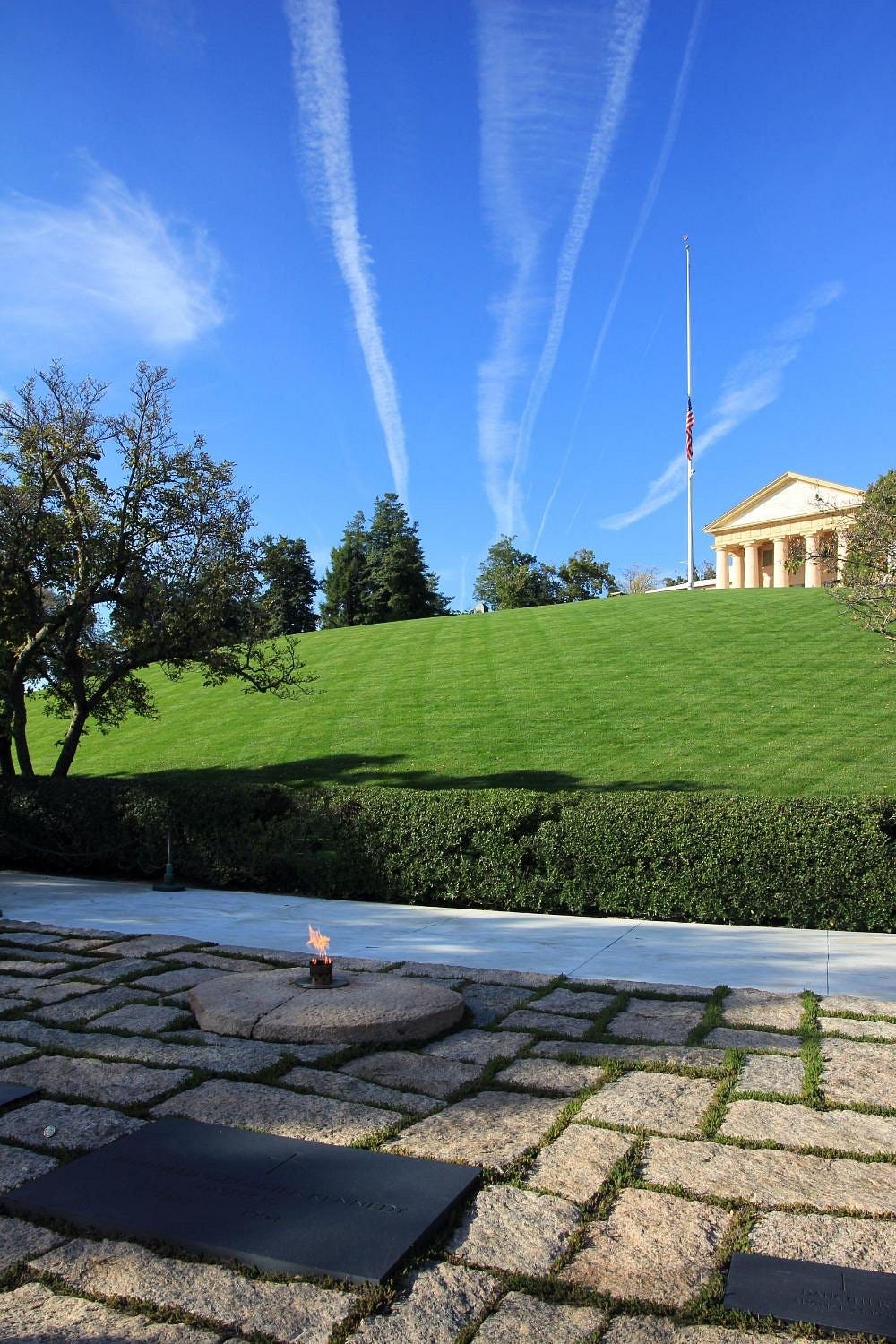
President John F. Kennedy Gravesite, Arlington
President Kennedy’s gravesite at Arlington National Cemetery

He’s not just out to dishonor one of our greatest presidents by cursing the Kennedy Center with his name. He doesn’t just intend to destroy the People’s House and turn it into Trump Tower II. He also wants to disturb the graves of the men and women he called “losers,” who wore their country’s uniform and are buried in Arlington National Cemetery. He wants to tear down anything he can’t put his name on in the nation’s capital and turn it into Mar a Lago north.

We will have no excuse if we don’t stop him this time. He turned loose the excavators on the East Wing and reduced it into rubble before anyone knew what he was doing. This time, we have been warned. The photograph published of Trump in Air Force One looking at some sort of plan to “demolish” the Kennedy Center tells us exactly what he intends to do. We must stop him. If we have to lay down our bodies in the way of the wrecking balls and teeth of the excavators, then that is what should be done.

President John F. Kennedy risked his life in war and lost his life while serving the country as its president. We lit an eternal flame in Arlington Cemetery to honor him, which Trump wants to extinguish with the shadow of his arch, and we built a center for the arts on the Potomac and named it after him which Trump has now said will “end up being ripped down” because he has been blocked from putting his name on it.

Neither thing can be allowed to happen. If this country stands for anything, it stands for honoring those who have served in uniform and given their lives to defend it. Arlington Cemetery is the resting place that was built on grounds owned by Robert E. Lee, who commanded the Army of Northern Virginia and signed the surrender of the Confederate States of America. The first casualties of the Civil War were buried in what became Arlington National Cemetery while the war was still being fought.

By any measure, it is hallowed ground.

Donald Trump wants to desecrate it with his awful over-decorated “Memorial Arch” that memorializes nothing more than himself. This must not be permitted to happen.

Nor should the destruction or desecration of the memorial to President Kennedy be permitted to happen. The Kennedy Center has for more than 50 years been a gathering place for residents of the Capital and visitors who have enjoyed concerts and plays and dances and art on its grounds. President Kennedy and his wife Jacqueline were great patrons of the arts. The center honors both of them. Donald Trump hates the fact that the nation reveres them. He tore out the White House Rose Garden, which had been designed and planted under the guiding hand of Mrs. Kennedy. He replaced it with a concrete slab that he has used in the same way he uses his patio at Mar a Lago. He tore down the East Wing of the White House where Mrs. Kennedy’s office, and the offices of other First Ladies, once stood. He hates tradition. He hates history. He hates the reverence for the past that is reflected in the historic sites of Washington D.C. such as the Reflecting Pool, and so he has either torn them down or dishonored them.

As well as being a convicted criminal and an accused rapist and an compulsive liar, he is a man with no taste and no sense of honor. He is beneath contempt. What he wants to do to dishonor President Kennedy and the service members buried in Arlington National Cemetery must not be allowed to happen.

We failed to keep Trump from being elected for a second time. We must not fail in our duty to uphold the honor of the nation’s capital and its historic sites that pay tribute to the heroes of our past. To allow Donald Trump to dishonor them will dishonor us as a country that stands for freedom and democracy. His destructive and dishonorable wishes must not come to pass.

I never thought I would have to write a column defending the place where my grandfather and grandmother are buried. To support my work covering Trump and Republican criminals and their politics, please consider becoming a paid subscriber.

Leave a comment

Share

Give a gift subscription

Read the whole story
DGA51
1 day ago
reply
Central Pennsyltucky
Share this story
Delete

Adam Smith: Rule of Law as the Backbone for Markets

1 Comment

Adam Smith’s 1776 book, An Inquiry into the Nature and Causes of the Wealth of Nations, is often described in casual conversation (at least by noneconomists) as a manifesto for the benefits and power of free markets. That’s a part of it, to be sure. But Smith was a profound thinker, not a pamphleteer, and he digs down into a much wider discussion of why the people of certain nations become wealthy. Barry R. Weingast offers his own thematic emphasis emphasis in “What Every PhD Student Should Know About Adam Smith” (Annual Review of Economics 2026, pp. 647-668).

Weingast runs through the Smithian topics that are familiar to most economists: division of labor, supply and demand, wages and apprenticeships, the role of money, poor laws, land rents, free trade, and so on. But Weingast’s emphasizes Smith’s discussion of how the laws and institutions supporting these factors arose. Where the lords ruled, those who worked the land called “slaves” by Smith. They had no right to move to another area, and if the land was transferred from one lord to another, the farmers also transferred automatically with the land. In this situation, Smith explains, no farmer under a lord had any incentive to increase production, because as Smith wrote, “[M]en in this defenseless state naturally content themselves with their necessary subsistence, because to acquire more might only tempt the injustice of their oppressors.” Smith also offers data that free men, in contrast to the “slaves” under control of feudal lords, produced about three times as much. Weingast calls this the no-growth “feudal equilbrium.”

Weingast encapsulates the Smithian argument about the transition away from feudalism in this way. In this feudal times in England involved three primary groups: the king, the great lords, and people in towns. However, commerce begins to travel up and down rivers, and at key points along those rivers, towns start building up to handld and manage the flow of commercial traffic. Weingast describes the power shift in this way:

The trading towns of Northern Europe managed to escape the feudal equilibrium, creating liberty, the rule of law, and long-term economic growth—at least for the merchant elite. How did the towns make this escape? … Smith began with the townsmen as part of the feudal equilibrium. He reports that the king and the lords attacked these unfortunate souls without “pity or remorse.” Over time, however, the king and the townsmen came to see that they had a common enemy in the barons and lords. Indeed, the townsmen were the enemies of his enemies. The king and towns therefore could benefit from a political exchange in which the
towns gave the king taxes, fixed for all time, in exchange for various rights. These included the right to build walls around their cities and to create their own militias for security, to have their own magistrates and judicial systems, and to create their own laws and mechanisms to enforce them. These changes provided the critical political and legal infrastructure to support markets, allowing the towns to get rich over time.

The towns thus created three separate and non-incremental revolutions—in security, liberty, and the economy. The towns controlled all of these revolutions. Moreover, these exchanges were incentive-compatible. The kings valued the revenue, giving them advantages over the lords, and the towns valued their rights, greater security, and the income and profits from long-distance trade. Both parties to the exchange therefore had incentives to maintain the deal, and both had an interest in seeing the lords lose power relative to their own power. Over time, the towns grew in income and stature relative to the stagnant agriculture in the countryside. Indeed, as the towns grew rich, they were ahead of the countryside by two centuries from the standpoint of political and economic development. Smith summarizes this process: “Order and good government, and along with them the liberty and security of individuals, were, in this manner, established in cities at a time when the occupiers of land in the country were exposed to every sort of violence” …

The towns also created an important transformation of the local countrysides as the towns brought these areas under their (local) security umbrella and with it a semblance of property rights, contract enforcement, and other aspects of the foundations of liberty and the rule of law. This allowed the former slaves in these areas to become specialists in the production of food and raw materials sold to merchants in the town for local consumption or for export in long-distance trade. Per Smith’s division of labor, their incomes were sure to rise above
the subsistence agriculture they had previously suffered for generations. Of course, this transformation occurred largely in the vicinity of the towns at first, spreading into the countryside far more slowly. Nonetheless, much of the agrarian hinterland remained trapped in the feudal equilibrium.

The towns used these rights from the king to take part in long-distance trade. I argue that, in many areas, resources became scarce over time, especially wood for building and for warmth (e.g., firewood). Every year this problem worsened as the scarcity increased. Holding constant for the risks, this scarcity slowly raised the value of taking part in long-distance trade. These merchants became enormously rich as they supplied the local economy with various goods that were scarce in their own towns while at the same time brought goods made or prepared locally that were scarce in other towns, often hundreds or even thousands of miles away. Again, we see here Smith’s division of labor at work.

The towns also had considerable violence potential. Given the violence of the lords, the violence potential of the towns had to be even higher. Indeed, this prowess in violence seemed a necessary and existential condition for the town’s survival. Had this condition failed, the lords would have continued to plunder the towns without pity or remorse.

In short, Smith (and Weingast) argued that the underlying conditions for division of labor, supply and demand, trade, and the other aspects of market forces were a balance of violence that allowed for public order, and then for contracts and markets to function. Weingast writes:

Indeed, in 1793, Dugald Stewart gave a eulogy for Smith [Stewart 1982 (1793)]. He reported a 1755 paper by Smith then in his possession (now lost), which said, “Little else is requisite to carry a state to the highest degree of opulence from the lowest barbarism, but peace, easy taxes, and a tolerable administration of justice; all the rest being brought about by the natural course of things.” To a neoclassical scholar of development, this sentence makes development sound formulaic. The reason, as I mention in the introduction, is that these economists assume the first and the third conditions when studying the developed world. But, as I suggest, Smith argued that creating these conditions is the task of development. To create a rule-of-law judicial system rather than a corrupt one based on bribery and privilege represents one of the central problems of modern development.

Of course, no country eliminated bribery and privilege altogether. There is always an element of “you-scratch-my-back, I’ll-scratch yours” and “who you know matters as much as what you know.” There are always interest groups lobbying politicians, and politicians seeking contributions. There are always people looking to build their own power. Adam Smith was a consummate realist, and in the quotation above refers to “a tolerable administration of justice,” rather than perfect justice. But even in a high-income country, pushing back hard against bribery, corruption, and privilege matters, because those factors erode the foundations on which the wealth of a nation is built.


The post Adam Smith: Rule of Law as the Backbone for Markets first appeared on Conversable Economist.

Read the whole story
DGA51
3 days ago
reply
Digging deeper into The Wealth of Nations.
Central Pennsyltucky
Share this story
Delete

Osama bin Laden’s dream come true: U.S. bases on the Arabian Peninsula are gone.

1 Comment

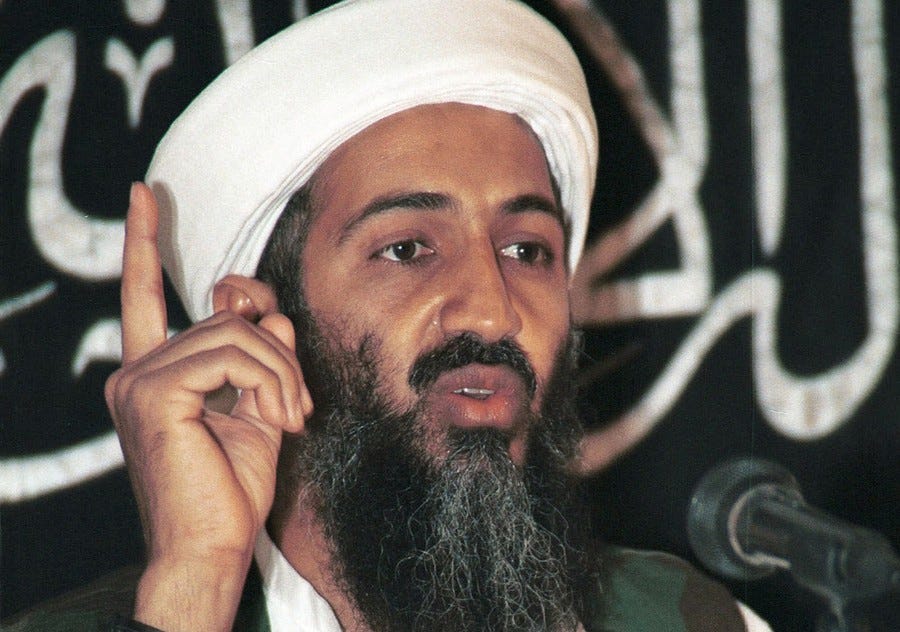
Osama Bin Laden Killed: Worldwide Reactions - The Atlantic
Photo: The Atlantic

It took him 25 years, but Osama bin Laden is winning his war on the Great Satan. He wanted to bring to an end the U.S. military presence in the Persian Gulf and the Arabian Peninsula, and it is happening.

Retired four-star General Barry McCaffrey assessed recently that the U.S. military has “probably permanently lost access to 15 Persian Gulf bases,” due to Trump’s war on Iran. The Pentagon Inspector General, in a report released today, said that “hundreds” of buildings on U.S. bases across the Middle East were destroyed by Iranian attacks that also caused $184 million in damages to diplomatic facilities in the region. All that damage was caused by thousands of missiles and drones fired by Iran.

Two F-15 fighters were destroyed during the war, along with one A-10 fighter. Five KC-135 refueling aircraft were destroyed on the ground, along with numerous helicopters. At least 30 Predator drones were destroyed “in various circumstances,” including being hit by drones and missiles while they were on the ground. The Pentagon has not released the number of Navy and Army weapons systems that were destroyed where they were deployed on U.S. bases, but it has been reported that several radar systems that cost in the billions of dollars were destroyed by Iranian missiles in Saudi Arabia.

It is significant that the Inspector General’s report did not put a dollar value on the damage done to military facilities in the Gulf region. Those would include buildings, hangars, storage facilities, barracks, offices and the like. It has been previously reported that U.S. military personnel had been moved from their bases in all the countries along the Persian Gulf, including two bases in Bahrain, five bases in Kuwait, three bases in the United Arab Emirates, three bases in Oman, one base in Qatar, and two bases in Saudi Arabia. Some were moved to U.S. bases further away from Iranian missiles and drones in Jordan. That’s not working very well. There have been recent Iranian missile strikes on U.S. bases there. Other military personnel were moved to Cyprus and to bases in Europe.

The U.S. practically decimated its defensive missile capability in the Gulf trying to shoot down Iranian missiles and drones. The Inspector General report says only that “munitions expenditures resulted in strategic inventory shortfalls and revealed industrial base bottlenecks for munitions resupply.” The Inspector General says they’re working on the problem.

That more or less covers it. The U.S. military presence in the Persian Gulf, outside of the Navy at sea outside the waters of the Gulf, is gone. The Pentagon still claims that approximately 50,000 troops were serving in support of “Operation Epic Fury.” They claim between 40,000 and 50,000 of them are still there, but they haven’t said where they are.

Bin Laden was particularly concerned with the U.S. presence in the Persian Gulf and swore in an infamous Fatwa released in 1998 that it was the duty of every Muslim to liberate the “lands of Islam” from the “grip” of the Great Satan.

So that’s the headline. Osama got what he wanted. It’s how the goal was accomplished that’s interesting.

Iran fired every single one of its drones and missiles defensively. They were trying to damage the U.S. capability of striking Iran after Trump’s initial attack in February. In other words, if Trump and Netanyahu hadn’t gone to war against Iran, we would still have all our Naval and Air Force and Army facilities in the Gulf.

Why were all those bases knocked out, all those buildings and other facilities and weapons systems destroyed? Because the U.S. military thought it was invulnerable. The Pentagon maintained its bases in the Gulf region pretty much the same way they did in Iraq and Afghanistan. They built berms around Air Force bases and Army installations and had guards on the base entrances against terrorism attacks. They built bunkers near military buildings and barracks, so if there was an attack from the air, people could rush into them for safety. The Navy simply built warehouses and office buildings in Bahrain in the area around the port where U.S. ships in the Gulf were resupplied. Previously, I’ve published photos of the damage done to the 5th Fleet Headquarters and resupply facilities. They were undefended.

Bunkers didn’t save the six who died in a drone attack on the base in Kuwait, or the soldiers who were killed in Jordan. Eighteen American military people were killed during and after Trump’s “Operation Epic Fury.”

The simple way of putting it is this: The Pentagon was not well prepared for Iran shooting back. That is why 15 U.S. bases are no longer functional in the Persian Gulf.

The Inspector General report has whole sections that describe what has happened since U.S. “assets” got blown up by Iran. A section called “U.S. Basing and Disposition” says basically that what they’re doing now is “taking into account Iranian ballistic missiles, one-way unmanned aircraft systems (OWUAS), and maritime threats.” There is no explanation why there was no preparation for those threats beforehand. Another section called “Logistics and Sustainment” tells the tale of how the U.S. Transport Command (USTRANSCOM) was responsible for moving stuff around after the war began and U.S. bases started to take hits. They actually brag about how they accomplished what they call – you’ll love this – “aircraft flushing—the rapid removal of air assets from an area under attack or threat.” If that sounds pathetic — celebrating running and hiding — that’s because it is.

Last year, Hegseth and Trump ordered every general and admiral in the U.S. military to fly to Quantico so Trump could subject them to a campaign rally speech and Hegseth could lecture them about “fat soldiers” and haircuts and beards. Those were the priorities of Donald Trump and Hegseth before they launched their war. That is why we don’t have a military presence in the Persian Gulf after “Operation Epic Fury.” It seems the U.S. military could not withstand the fury of the Iranian military, which does not have a trillion-dollar defense budget and manufactures its missiles and drones in underground facilities that all the missiles and bombs we dropped on Iran were not able to seriously damage.

It took a few terrorists armed with some boxcutters to take down the World Trade Center and do significant damage to the Pentagon. Since that happened, we have spent trillions of dollars on two wars, lost more than 7,000 soldiers and sailors and airmen, and lost the wars themselves. We then spent billions and billions of dollars on our military facilities in the Gulf region to maintain what the military likes to call a “presence” in the region.

What that accomplished over the last 25 years is, to put it mildly, unclear. When it came time to wage a war in the region where we maintained our “presence,” Iran won. They closed the Strait of Hormuz, costing American citizens billions of extra dollars in the cost of gasoline and groceries and who knows what else. Now Iran has used its proxy, the Houthi rebels, to damage a major oil pipeline in Saudi Arabia and close the strait at the mouth of the Red Sea, doing more damage to the shipment of oil and other necessities to Europe and points west through the Suez Canal.

As I recall, the U.S. Navy wrapped Osama’s body in canvas and tossed it over the side of an aircraft carrier in the North Arabian Sea after he was killed in Pakistan in 2011. At least part of the flotilla of Navy combat ships we’ve got cruising around in circles allegedly maintaining Trump’s blockade of Iranian ports is in the North Arabia Sea in the waters above Osama’s dead body.

You can almost hear his ghost laughing at the Great Satan.

I want to make a direct plea for your support. Writing this column every day is hard work. Please consider buying a subscription. It’s how Tracy and I pay our bills.

Give a gift subscription

Leave a comment

Share

Read the whole story
DGA51
3 days ago
reply
Bibi convinced Preznit Fuckwit to attack Iran and got US into this pickle
Central Pennsyltucky
Share this story
Delete
Next Page of Stories