Log in


I hadn’t given much thought to the meaning of the word “honor,” in years, and now I can’t think of anything else.
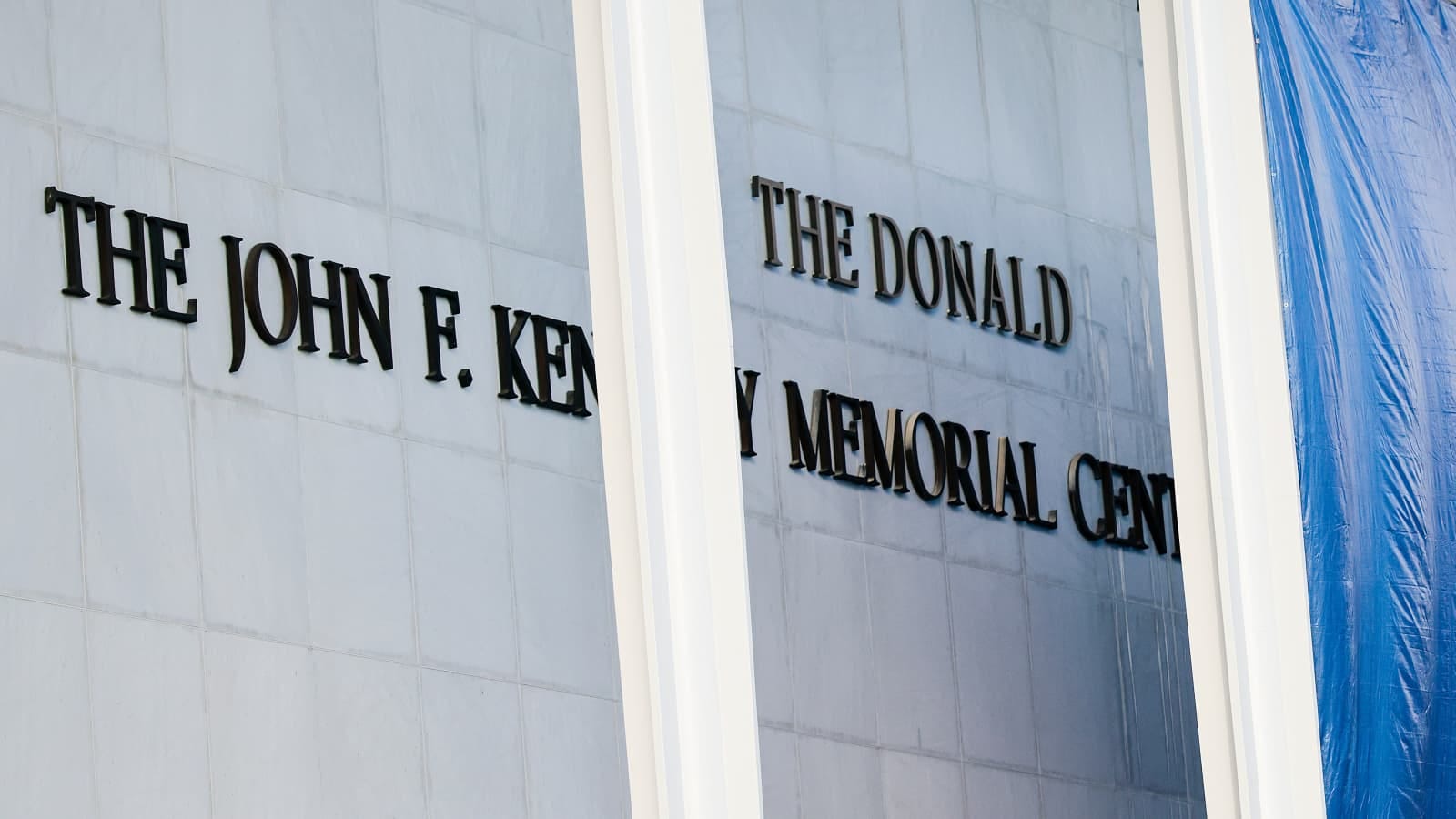
I think what did it was the photograph of a worker installing Trump’s name above that of the man the John F. Kennedy Memorial Center for the Performing Arts is named for. I had such a visceral reaction, I searched for a word to describe my feelings. What Trump did was dishonorable. That’s all I could think: The man simply and completely lacks any sense of honor.
He lacks a lot of other things, too – decency, empathy, taste all come to mind. But his lack of honor stands out among the rest, because honor involves a sense of loyalty and dedication to others.
I went to West Point, which prizes honor in its motto: Duty, Honor, Country. On the first day that you become a cadet, which for me was June 4, 1965, they take the time out of an incredibly busy day to teach you about honor. You’re given a brief lecture by an upperclassman about the Honor Code, which states that “A cadet will not lie, cheat, or steal, nor tolerate those who do.”
That’s a lot to take in on your first day at West Point, when you are weighed, your height is measured, and you’re issued uniforms; you’re taught to salute and given what they call your three answers -- yes sir, no sir, no excuse sir; you’re taught how to arrange yourself into squad, platoon, and company formations and you’re taught to march; and then, having marched to Trophy Point, where stands Battle Monument, honoring those in the Union Army who gave their lives during the Civil War, you recite the oath that will guide your service to your country for the rest of your life.
They hammer into you the importance and necessity of honor to the profession of arms. It boils down to a simple concept: If you are to lead in combat, everyone must depend on the fact that you are giving truthful and honorable commands and answers to questions to and from those whom you command and those who command you.
That’s it. You’re told honor works both ways: they can depend on you, and you can depend on them. If you are asked what the position of your unit is, and you have not yet reached the place you were ordered to be, you must respond truthfully because units around you are maneuvering as well, and to lie about your position might subject you and your soldiers to friendly fire, or to artillery fire aimed at the enemy but which might hit your position if you lie about what your location is.
That’s what they call “the combat example,” but it’s way more broad than that. If you’re tested academically, those in charge and those around you in your own class, must be able to depend on your score not having been achieved by cheating. And on it goes, encompassing everything you do. When you graduate, the idea of the Honor Code is that everyone graduating with you has accepted and lived by the same code you did. You could depend on them while you were cadets, and you can depend on them now and in the future.
While you’re at West Point, you think about the Honor Code all the time because it applies to everything you do as a cadet. When you graduate, the Honor Code, with its threat of expulsion if you are found to have violated it, is behind you. You don’t think about it as much. I don’t recall the word “honor” coming up even once in my brief time as an officer. It wasn’t even a category on the report that rated your effectiveness as a leader. “Loyalty” was, but “honor” wasn’t.
What does this have to do with Donald Trump and what he did in renaming the Kennedy Center? Given everything we know about the enormity of Trump’s capacity to tell lies about practically everything, why does Trump’s putting his name above that of John F. Kennedy stand out?
The Kennedy Center is the memorial that this nation, in grieving his death after he was assassinated, decided to erect in Kennedy’s honor. Not a limestone or granite monument like those honoring Lincoln or Washington or Jefferson. A center for the arts with Kennedy’s name on it was built as a “living monument” to a man who was not only a Senator and a President but a war hero who oversaw the rescue of the crew of his PT boat during World War II after it was rammed and sunk by a Japanese destroyer.
Kennedy served his nation honorably in combat as well as in government. To take from him the name of his memorial by placing your name above his is to steal his honor. Everyone knows what that is: to steal honor is to claim the honors awarded others without having earned them. It is a crime under the Stolen Valor Act to impersonate a soldier and wear medals that you did not earn.
That is what Donald Trump did in taking the Kennedy Center for himself. He stole John F. Kennedy’s honor.
As we all know, Trump is obsessed with putting the name “Trump” on buildings, vodka bottles, airplanes, a so-called “university,” and we could go on. When he visited Mount Vernon during his first term, he is said to have wondered why Washington had not named his home after himself. “If he was smart, he would have put his name on it,” Trump was quoted as saying.
Trump recently put photos or paintings of all the nation’s presidents along the colonnade outside the West Wing of the White House and affixed plaques beneath them. Much has been made of the inaccurate or disparaging nature of some of the plaques and the fact that the photo of Joe Biden isn’t of his face but instead shows an auto-pen. But what Trump calls this display says even more about the way he sees himself, the White House, everyone who preceded him, and the presidency itself. He calls it “The Presidential Walk of Fame.”
It seems silly to have to say this, but fame is not honor, even though Donald Trump clearly mistakes the two. Nor are gold appliques on White House walls. Nor is placing your name above that of a man who by his service to this country in and out of uniform brought honor not only to his name, but to the country he served.
Greatness will forever elude this small, pathetic creature in a suit and polished shoes, because greatness cannot be packaged and named like a product or a building. It can only be lived and then accorded by others.