Log in


Human beings love the sun. They go to the beach to lie in the sun. They build patios next to their houses where they can sit in the sun. Humans truly love the sun until there is too much of it. When there is too much sun for too long, it gets hot, and humans go inside to get out of the sun and the heat. “Inside,” in most of the developed world, means air conditioning. Human beings love air conditioning, because inside, out of the sun, air conditioning keeps them cool.
To be “inside” means to enter a building. Buildings need roofs to protect what is within them from the sun and rain. The walls of buildings contain the air-conditioned interiors and help keep the buildings cool enough for humans to use them.
Roofs, in addition to protecting buildings from the sun and rain, make them visible from the air. When you fly over a city and look down, what you see are roofs. In big cities, you can identify buildings by their roofs. In Washington D.C., the Capitol’s dome is highly visible from the air. The distinctive shape of the White House, which used to have a central area flanked by two wings, made it identifiable from the air. In New York City, the Empire State Building and other landmarks are identifiable by their spires, or slanted roofs, or gabled roofs.
The problem with roofs from a purely military standpoint is that their easy visibility from the air makes them targets. Buildings tend to be grouped together by the purposes for which they were built. Downtown Manhattan contains buildings filled with banks and the headquarters of financial firms and their trading floors, and of course the people who run the banks and trade the stocks on the trading floors.
On military installations, some buildings contain command and control facilities filled with communications equipment and computers that control the complex weapons systems the military uses. Other buildings contain military equipment and weapons and military personnel. When during the first days of the war on Iran, the U.S. hit a girl’s school by accident, that was because its building used to be part of a complex of Iran Revolutionary Guard military command and control buildings. U.S. intelligence had identified the IRGC buildings by their roofs. The mission that was carried out using bombs and missiles destroyed all the buildings in the military compound, including the building that used to be in the IRGC complex but was now a girls’ school.
The Wall Street Journal published an extraordinary article yesterday on how the Iranian military damaged a major military installation in the Middle East, the Naval Support Activity (NSA) base in Bahrain. Using maps and images from Google Maps, the Journal showed images of the Navy’s complex taken by a Google satellite. It looks like any Naval or other American military facility anywhere – a complex of warehouse-like buildings spaced tightly together separated by streets and tree-filled plazas. There is even a field set up for baseball and football games.
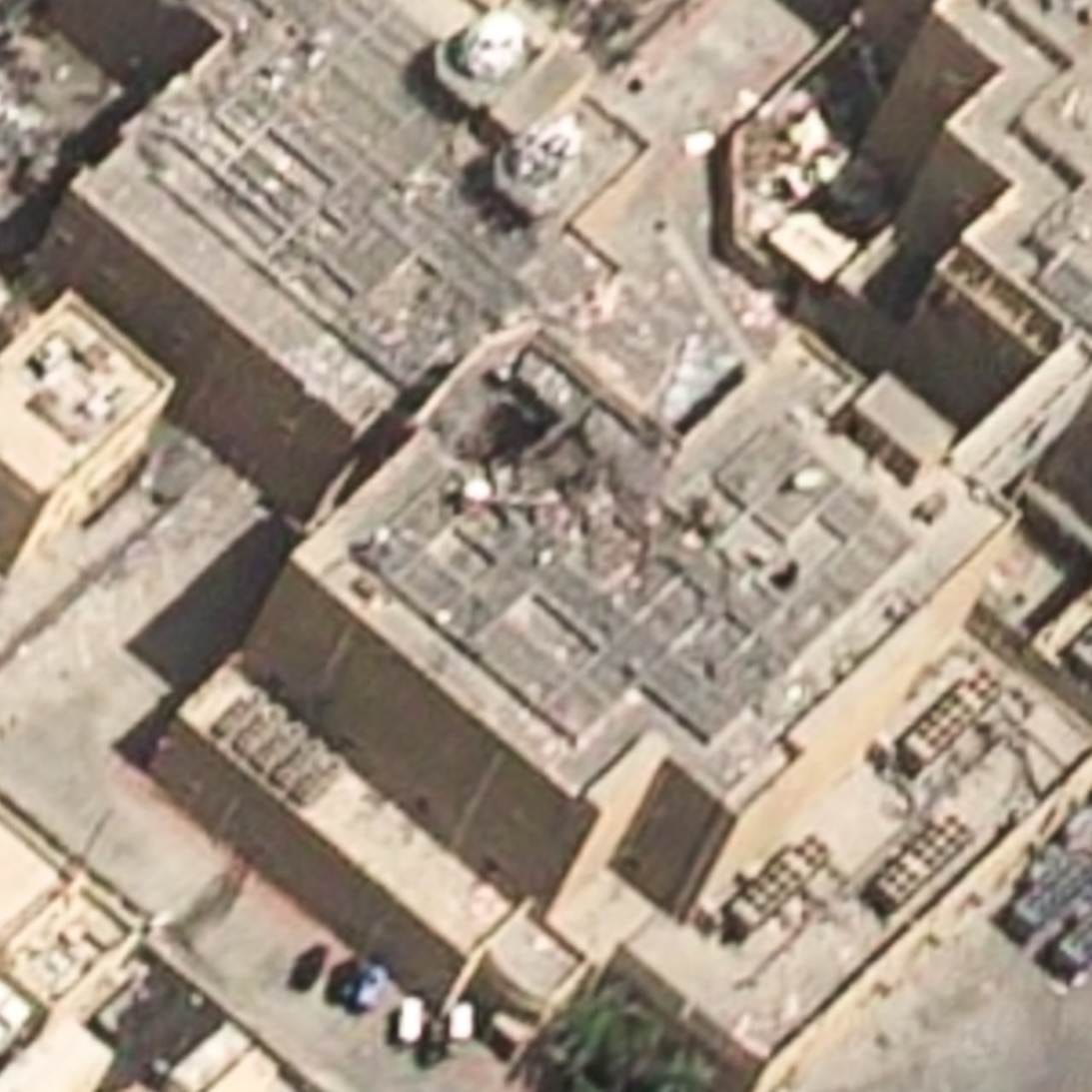
The Journal followed the initial photo of the Naval complex with blown-up photos of buildings that had been hit by Iranian drones. There were holes in the roofs of the buildings, one after another. One of the buildings, a large square structure with a roof covered in air conditioning equipment, was the headquarters for the Navy’s Fifth Fleet, which controlled all the ships you read about during the war – the three aircraft carriers, the destroyers and guided missile ships and mine-sweepers.
The close-up photo of that building showed a hole in its roof. Not a big one – the hole was in a corner of the building consisting of probably one-eighth of its roof. The Journal reported, “The building is no longer usable, according to a U.S. official.”
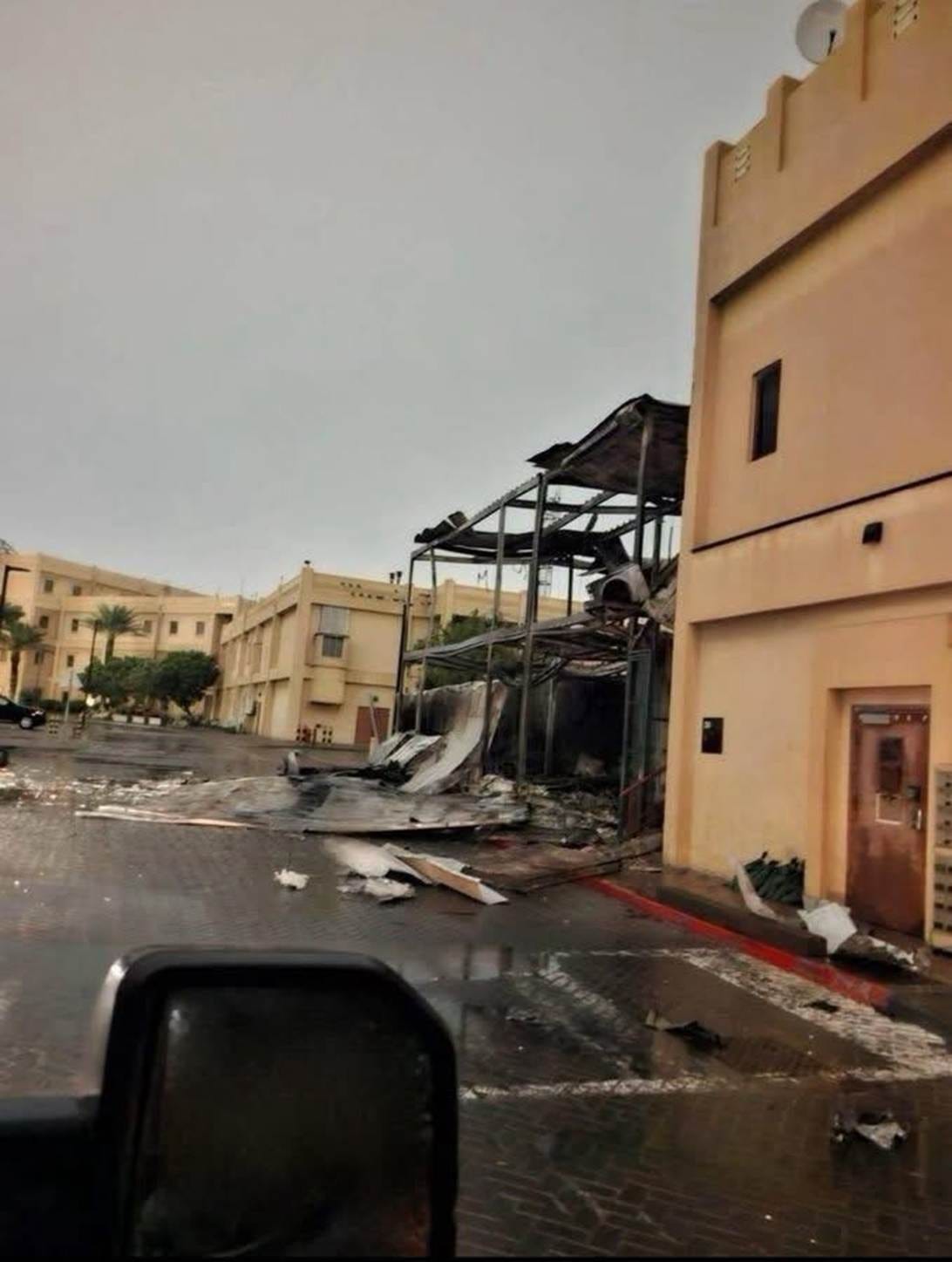
Another photo was a street view of a completely destroyed building that contained the Naval Security Forces training center. The Journal reported without comment, “The NSF provides security for the base and routinely conducts emergency preparedness drills.” Drills the Journal did not bother to report did not work to protect the huge Naval Support Activity base at all.
Another street view photo showed extensive damage to a building that housed Task Force 59, identified by the Journal as “the Navy’s first drone and artificial intelligence unit, historically housed drones in one bay of the complex.” The Journal dryly reported that Task Force 59 was “charged with using unmanned drones and AI systems to monitor key Middle East waterways.” The Journal did not bother reporting how badly Task Force 59 failed in its mission since the main waterway it was supposed to “monitor” was closed and controlled by Iran using the same sort of drones that destroyed the task force’s headquarters.
The Journal also published a video showing a Shahed drone striking and destroying a domed radar that was part of a complex of two AN/GSC-52B satellite communications terminals. The drone strike happened in the “opening hours of Iran’s retaliatory strikes.” The Journal did not note that the destruction of the terminals and radars that cost $20 million each left them unusable for the remainder of the four-month war. The Shahed drone flew at a speed of 140 miles per hour and cost about $5,000.
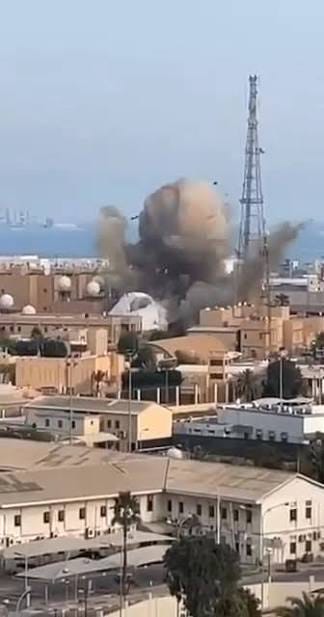
According to the Journal, no American navy personnel were injured during the Iranian drone strikes, but the base was sufficiently damaged that it was closed for the duration of the war. The headquarters of the Fifth Fleet was moved somewhere else. The equipment that was destroyed stayed in the ruined buildings, however, and was unusable because it was damaged, and because there were no Navy sailors there to operate it.
The buildings at the naval base in Bahrain were not the only military installations destroyed by Iran using $5,000 drones. Iran hit every military installation in the UAE, Saudi Arabia, Qatar, Jordan, Iraq and Kuwait – 20 military and diplomatic facilities in all, according to the Journal. The only deaths caused by the Iranian drone strikes happened at a U.S. facility in Kuwait and an airbase in Saudi Arabia, seven in all. Six airmen were killed when a U.S. refueling tanker crashed in Iraq.
Now the U.S. is “reevaluating its footprint in the region,” according to the Journal. The Pentagon is considering moving its military installations west, out of range of Iranian drones. Israel is one place where new U.S. bases might be constructed. The Pentagon is considering putting some of the new bases underground.
Underground bases do not have roofs. However, as the U.S. showed in attacks on Iran during the war and last year, underground facilities can be destroyed by missiles and bunker buster bombs.
Because the naval facility in Bahrain had the initials “NSA,” I decided to take a look at the National Security Agency, also called the NSA, headquartered in Maryland. Driving on I-25 past its location, several exits are marked for the NSA and Fort McNair, the American military intelligence base. Both are large complexes of many buildings. Here is a satellite view of the NSA headquarters:
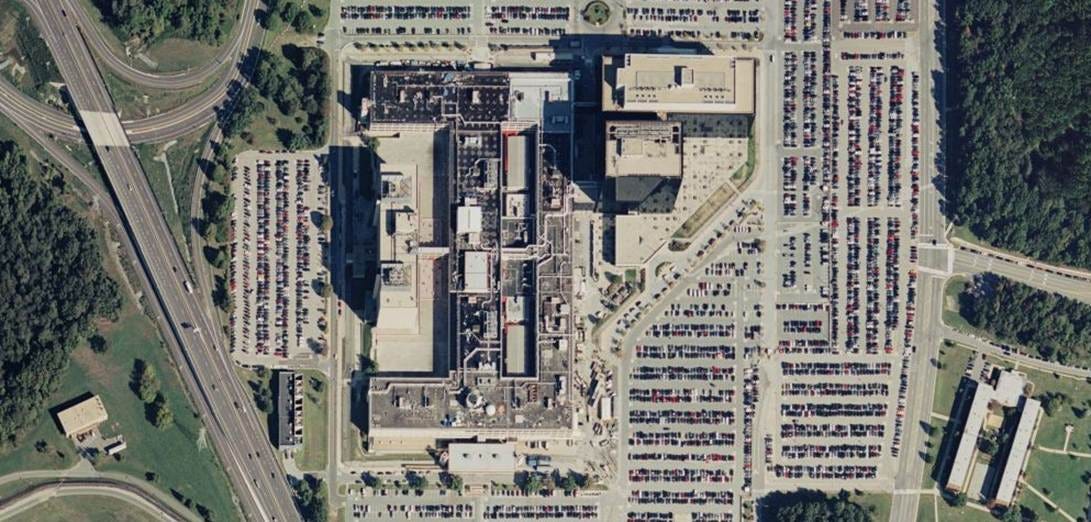
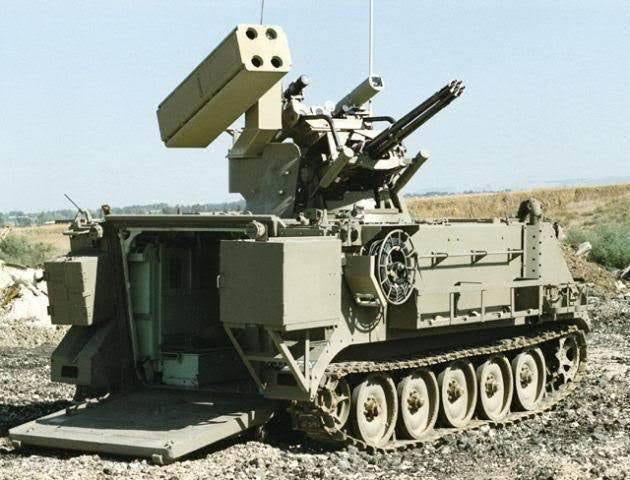
Lots of buildings. Lots of roofs. The only thing protecting that U.S. facility from Iranian drones, or Russian drones, or Chinese drones for that matter, is the Atlantic Ocean. I can tell you that the NSA is not protected from attack by missiles, however, because our government thinks that our military facilities, including the Pentagon and the CIA, are invulnerable. Just as they thought all those military bases in the Middle East were invulnerable. There were no missile or drone defenses for the military facilities in the Middle East that have now been closed, every one. The Shahed drone in the video could have been shot down by a soldier firing an M-240 machine gun that costs several hundred dollars. It could have been shot down by an M-163 Vulcan air defense gun, a rotary “Gatling” style weapon that fires 20 mm cannons and has been in service since 1968. I commanded a platoon of M-113 armored personnel carriers like it in 1969. It is equipped with a pod of Stinger heat-seeking anti-aircraft missiles that have been in service since the mid-1960’s. There are also shoulder-held versions of the Stinger that could have shot down the Shahed drone that destroyed millions of dollars in communications equipment in Bahrain and sent the entire Navy Fifth Fleet packing. So we could have used weapons that are 60 years old to defend the billions of dollars of military bases got knocked out during the war we just lost against Iran.
Here is a Vulcan and Stinger pod mounted on an M-113 platform.
The United States had billions of dollars in military equipment in the Middle East, including artificial intelligence facilities, high-tech communications gear, extraordinarily expensive radar domes attached to anti-aircraft systems, several of which were destroyed as they sat undefended on the ground at U.S. bases in Saudi Arabia.
Iran has none of that sophisticated military stuff. Iran had Shahed drones that it manufactures in underground facilities that were not destroyed during the war. Iran has missiles that it also manufactures underground that were not destroyed during the war.
It was announced today that Trump ordered a retaliatory strike on Iran because they hit a passing cargo ship with a drone recently. The ship was damaged, but there was no loss of life, and it kept going. So, Trump ordered our military to hit “Iranian missile and drone targets,” according to the New York Times. The strikes lasted 90 minutes.
Goody-goody. That must have scared them.
Everything we have costs millions and millions of dollars. It takes a multi-hundred billion dollar defense budget to run the whole thing. We have military installations all over the world, more than 100 of them according to military experts. All our weapons and military personnel are protected from the sun and rain under roofs in buildings. But they are not protected from drones and missiles. Look at what Ukraine is doing with inexpensive drones to Russia right now. There is a gas shortage in Moscow. Crimea has been “turned into an island” by drone strikes from Ukraine.
It was recently reported that an AI system known as “Mythos” made by Anthropic took five hours to completely “infiltrate nearly all of the National Security Agency (NSA) classified systems within a few hours” during a “red-team” evaluation and test of vulnerabilities. So, all those NSA buildings in Maryland in the satellite photo were rendered inert in a few hours by a couple of computer techs sitting at terminals typing on keyboards. Wow. I feel safer already.
It was also reported that Russia is “bombarding” and “seeding” AI systems all over Europe with propaganda. So, if you’re in France or Germany and you ask Chat GTP or Grok a question, you just might get Russia’s version of an answer today. AI systems are said to “learn” from raking through billions of bits of data, and what they’re learning in Europe is being controlled at least in part by Vladimir Putin.
We spend billions and billions on defense and security, and we are not secure, and our military facilities overseas are not safe. If drones can knock out military bases in the Gulf, they can be used by non-state actors in Africa and Asia and elsewhere to damage or put entirely out of business all those military “assets” we have spent decades establishing.
The Wall Street Journal quoted a retired admiral who commanded our Navy in the Middle East saying the Navy base in Bahrain “has been there for more than 50 years. I think there are some things we would do differently.”
The admiral is right. This is the world we live in now. We are going to have to do a lot of things differently, or we will go broke on a “defense” that can’t defend and a system of “intelligence” that isn’t intelligent enough to know that a country like Iran can locate the roofs of our military installations and knock them out with weapons they make in underground bunkers for way less than what Trump just spent to ruin the reflecting pool on the mall in Washington.
In short, unless we get smart and make it fast, we are fucked.